
What's Happening?
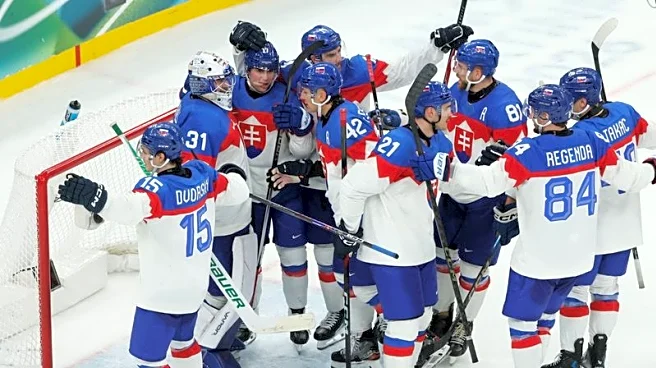
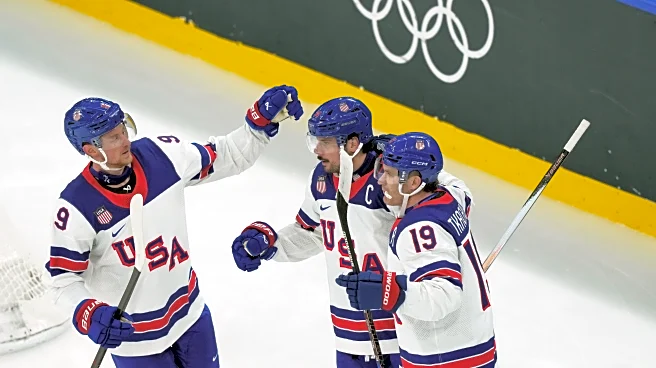
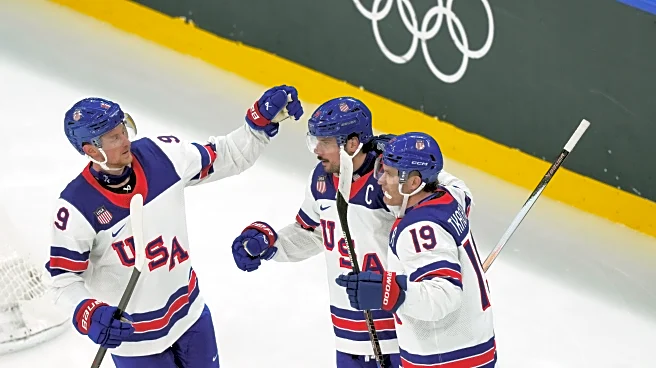
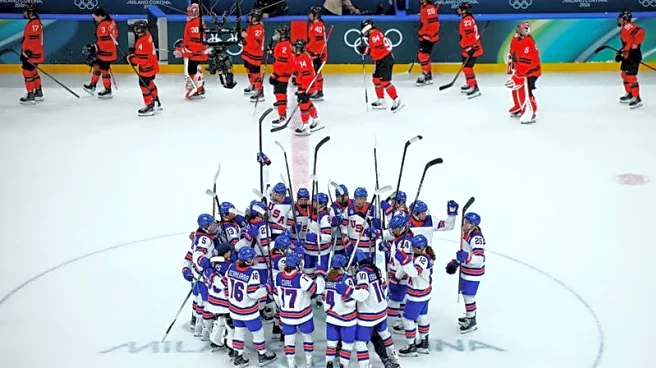
During the Milano Cortina 2026 Winter Olympic Games, Latvia's ice hockey team achieved a significant milestone by securing their first Olympic win in 12 years, defeating Germany. Arturs Silovs, the Latvian goaltender, played a crucial role by making 26 saves. Meanwhile, in other matches, Sweden's Erik Karlsson contributed two assists in their victory over Slovakia, although Sweden did not win by a sufficient margin to top their group. Team USA, with Jake Guentzel scoring, triumphed over Denmark with a 6-3 scoreline, enhancing their prospects in the tournament. The U.S. and Canada are both in strong positions to secure byes into the quarterfinals, with goal differentials playing a critical role in determining their seeding. The competition's
format, which does not allow for reseeding, means that the top-seeded team will face a potentially easier path in the knockout stages.
Why It's Important?
The outcomes of these matches have significant implications for the tournament's progression. The U.S. and Canada, traditionally strong teams, are vying for advantageous positions in the knockout rounds. The goal differential is a key factor, as it could determine the ease of their path to the finals. The unexpected group win by Slovakia over Sweden has introduced an element of unpredictability, potentially leading to early matchups between top teams in the quarterfinals. This scenario could result in one of the tournament favorites being eliminated earlier than anticipated, opening opportunities for other teams to advance further than expected.
What's Next?
As the tournament progresses, the focus will be on the upcoming matches that will determine the final seeding for the knockout stages. The U.S. and Canada will be particularly attentive to their performances, aiming to secure the best possible goal differential to ensure a favorable draw. The pressure is on both teams to deliver strong performances in their remaining group matches. The results will not only affect their immediate prospects but could also influence the overall dynamics of the tournament, potentially leading to unexpected outcomes in the later stages.