



What's Happening?
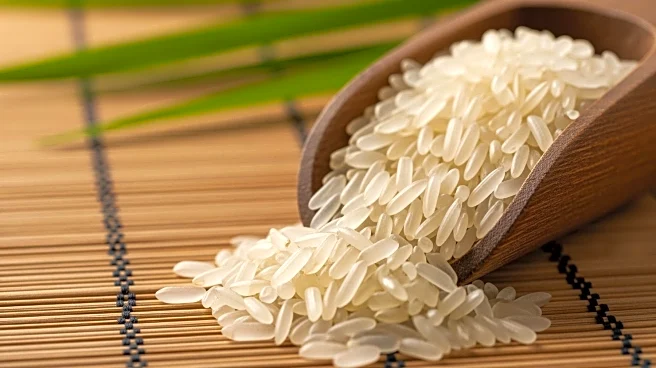
LT Foods, the owner of the Royal and Daawat basmati brands, has announced plans to set up a new rice processing facility in Raichur, Karnataka, India. The company has allocated an investment of Rs60 million ($670,215) for the plant, which will have an initial annual capacity of 30,000 metric tonnes. The facility is designed to process regional rice varieties such as sona masoori, kolam, and lachkari. The commercial operations are expected to commence in February, pending statutory and regulatory approvals. This expansion comes as LT Foods reports significant financial growth, with a 30% increase in consolidated revenue for the second quarter of its 2026 financial year, reaching Rs27.72 billion. The company's EBITDA rose by 24% to Rs3.16 billion,
and profit after tax increased by 9% year-over-year.
Why It's Important?
The establishment of a new rice processing plant by LT Foods in Karnataka is significant for several reasons. It represents a strategic expansion in the domestic market, potentially boosting local employment and economic activity in the region. The plant's focus on processing regional rice varieties aligns with consumer preferences and could enhance the company's market share in India. Additionally, the financial growth reported by LT Foods indicates a robust performance, which may attract further investment and strengthen its position in the global food industry. The company's recent acquisition of Global Green Europe also suggests a strategic move to diversify and expand its product offerings in the ready-to-eat and ready-to-heat segments, potentially increasing its competitiveness in international markets.
What's Next?
As LT Foods prepares to launch its new rice processing facility, the company will likely focus on securing the necessary regulatory approvals to ensure a timely start to operations. The expansion may prompt further investments in infrastructure and technology to enhance production efficiency and product quality. Additionally, LT Foods might explore partnerships or collaborations to leverage its expanded processing capabilities and distribution network. The company's ongoing financial growth and strategic acquisitions suggest a continued focus on expanding its global footprint and product portfolio, which could lead to further developments in the food and beverage sector.