





What's Happening?
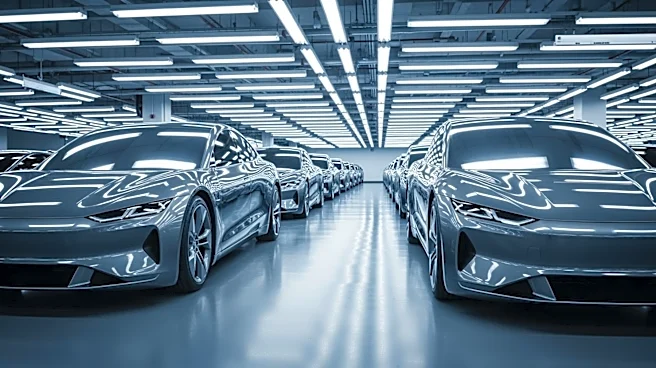
Tesla has reported a significant discrepancy between its vehicle production and delivery numbers for the first quarter of 2026. The company produced 408,386 vehicles but delivered only 358,023, resulting in a surplus of 50,000 vehicles. This marks Tesla's
largest-ever inventory surplus, highlighting a shift from its previous dominance where demand consistently outpaced supply. Historically, Tesla has been known for producing fewer vehicles than its capacity, yet maintaining high demand. However, the current situation suggests a potential change in market dynamics, as the company continues to produce vehicles at a high rate despite a decrease in demand. This inventory surplus is a notable development for Tesla, which has built its reputation on the ability to sell cars at a premium due to high demand.
Why It's Important?
The record inventory surplus at Tesla is significant as it may indicate a shift in the electric vehicle market dynamics. For years, Tesla's business model relied on high demand and limited supply, allowing the company to maintain premium pricing. The current surplus suggests that demand may be waning, which could impact Tesla's pricing strategy and profitability. This development is crucial for stakeholders, including investors and competitors, as it may signal a need for Tesla to adjust its production strategies or explore new markets to maintain growth. Additionally, the surplus could affect Tesla's stock performance and investor confidence, as the company navigates changing market conditions.
What's Next?
Tesla may need to reassess its production and delivery strategies to address the inventory surplus. Potential steps could include scaling back production or enhancing marketing efforts to boost demand. The company might also explore new markets or product offerings to attract more customers. Stakeholders will be closely monitoring Tesla's response to this situation, as it could influence the company's future growth trajectory and market position. Additionally, industry analysts and competitors will be watching for any strategic shifts that could impact the broader electric vehicle market.