

What's Happening?
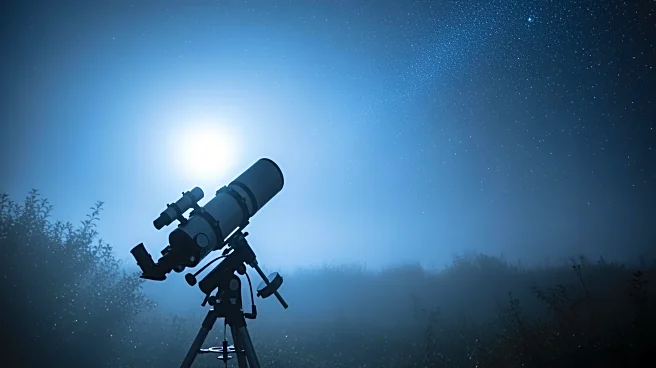
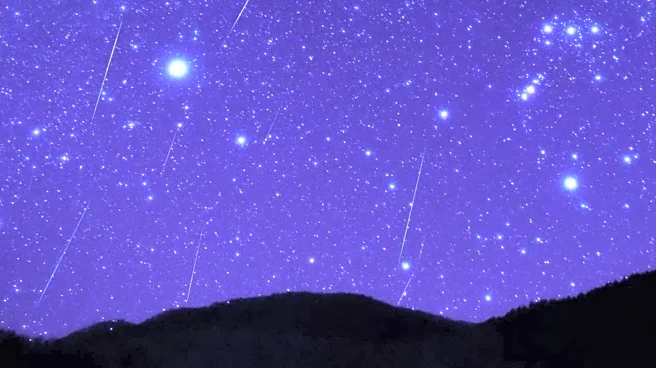
NASA has released its skywatching tips for April 2026, highlighting several celestial events. Mercury will be at its brightest on April 3, making it visible in the eastern sky before sunrise. The Lyrid meteor shower is set to peak on April 21-22, offering
a display of 'shooting stars' as Earth passes through debris from Comet Thatcher. Additionally, Comet C/2025 R3 will be visible in the eastern sky, with its closest approach to Earth on April 27. These events provide opportunities for both amateur and professional astronomers to observe and study the night sky.
Why It's Important?
These skywatching events offer valuable opportunities for public engagement with astronomy and can inspire interest in space science. Observing celestial phenomena like Mercury's visibility, meteor showers, and comets can enhance understanding of planetary movements and the dynamics of our solar system. Such events also provide educational opportunities for schools and science organizations to promote astronomy and encourage participation in observational activities. The visibility of Comet C/2025 R3, in particular, allows for the study of cometary behavior and composition, contributing to ongoing research in planetary science.