



What's Happening?
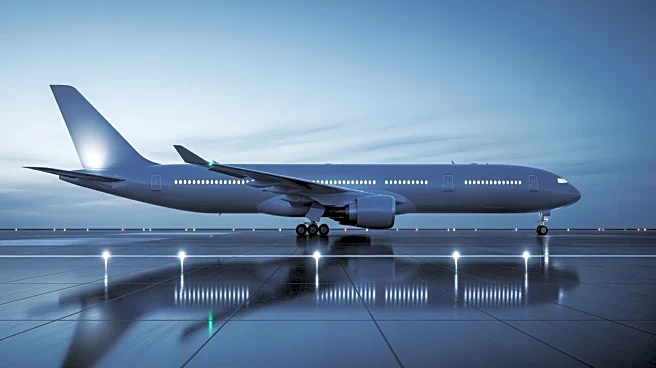
North American airlines, including major carriers like Air Canada, American Airlines, Delta Air Lines, and United Airlines, are transitioning to modern widebody aircraft such as the Airbus A350 and Boeing 787. This shift is part of a broader strategy
to replace older fleets, including the Airbus A330, Boeing 767, and Boeing 777. By 2023, these airlines had surpassed their 2019 flight cycle levels, with a notable shift in aircraft utilization. The Boeing 777, which dominated in 2019, saw its share decrease slightly, while the Boeing 787 increased its share significantly. The Airbus A350, although still a smaller part of the fleet, has seen growth in its utilization. This transition reflects a strategic move towards more efficient and modern aircraft, aligning with industry trends towards sustainability and cost-effectiveness.
Why It's Important?
The transition to modern widebody aircraft by North American airlines is significant for several reasons. Firstly, it represents a shift towards more fuel-efficient and environmentally friendly aircraft, which is crucial as the aviation industry faces increasing pressure to reduce carbon emissions. Secondly, the adoption of newer aircraft can lead to cost savings for airlines through reduced maintenance and operational costs. This shift also indicates a recovery and growth in the aviation sector post-pandemic, as airlines invest in expanding and modernizing their fleets. For passengers, this could mean improved comfort and amenities on long-haul flights. The move also positions these airlines competitively in the global market, as they can offer more efficient and reliable services.
What's Next?
As North American airlines continue to integrate modern widebody aircraft into their fleets, further changes in fleet composition and utilization patterns are expected. Airlines may continue to phase out older models, such as the Boeing 767 and older Airbus A330s, in favor of newer, more efficient aircraft. This could lead to increased orders for the Boeing 787 and Airbus A350, depending on market conditions and airline strategies. Additionally, airlines may explore new routes and expand existing ones, leveraging the capabilities of these modern aircraft. Stakeholders, including aircraft manufacturers and suppliers, will likely monitor these developments closely, as they could influence production and supply chain dynamics.