




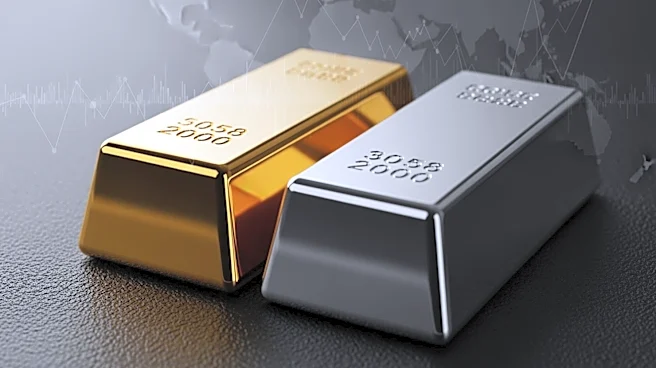

What's Happening?
Gold and silver prices are experiencing volatility as the global financial market faces pressure from strong US bond yields. The yield of 30-year US Treasury bonds is above 5%, and 10-year bonds exceed 4.5%, increasing the opportunity cost of holding
non-performing assets like gold and silver. Analysts suggest that the US Federal Reserve may maintain a tight monetary policy, potentially raising interest rates. Despite this, gold and silver may regain appeal if confidence in government bonds weakens. The long-term outlook for gold remains positive, while silver is seen as having greater growth potential due to its dual role as a currency and industrial raw material.
Why It's Important?
The rise in US bond yields reflects persistent inflationary pressure and could signal weakening confidence in government bonds. This situation may enhance the appeal of gold and silver as safe-haven assets. Increased borrowing costs, prolonged inflation, and high energy prices are pushing the market closer to systemic risks. The traditional 60/40 asset allocation model is losing efficiency, with a trend towards diversification that includes a larger proportion of solid assets like gold. Silver's volatility and growth potential are supported by industrial demand and limited supply, making it a valuable asset in the context of increasing financial risks.
Beyond the Headlines
The shift in asset allocation models and the potential for systemic risks in the financial market highlight the need for diversification and risk management. As real yields increase, the demand for safe-haven assets like gold and silver may rise, influencing investment strategies. The dual role of silver as both a currency and industrial material positions it uniquely in the market, offering opportunities for growth despite short-term volatility. The evolving financial landscape underscores the importance of adapting investment approaches to mitigate risks and capitalize on emerging trends.