


What's Happening?
The United States Department of Agriculture (USDA) is actively working to reduce tariffs imposed by India on American agricultural products. Undersecretary for Trade and Foreign Agricultural Affairs, Luke Lindberg, addressed the House Appropriations subcommittee,
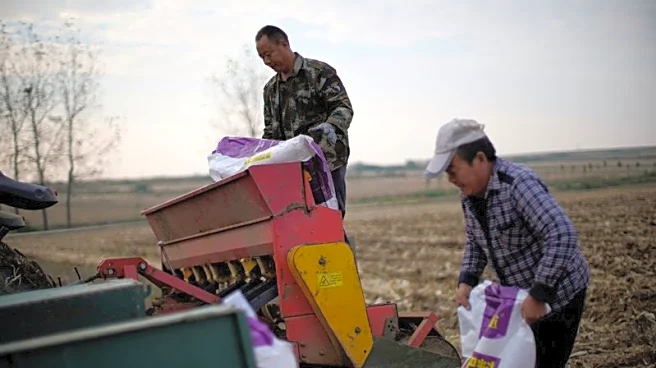
emphasizing the administration's 'America first' trade strategy. This approach aims to enhance US agricultural competitiveness globally by securing better trade deals, strengthening buyer-seller relationships, and holding trade partners accountable. The focus is on major markets like India and China, with particular attention to high tariffs on products such as pecans, which can reach up to 100 percent. Lindberg indicated that negotiations with India are ongoing, with the Office of the US Trade Representative finalizing agreements that may include pecans and other tree nuts. The strategy also involves increasing domestic production and consumption of US-grown food to benefit American farmers.
Why It's Important?
Reducing tariffs on US agricultural exports to India could significantly impact American farmers by opening up new markets and increasing competitiveness. High tariffs have historically limited US access to the Indian market, particularly for specialty crops like tree nuts. By negotiating lower tariffs, the USDA aims to restore the US agricultural trade balance to a surplus, which could lead to increased export revenues and support for domestic agriculture. This move is part of a broader strategy to diversify export markets and reduce reliance on any single country, thereby enhancing trade resilience. The potential agreement with India could also strengthen bilateral trade relations and set a precedent for future negotiations with other countries.
What's Next?
As negotiations with India continue, the USDA and the Office of the US Trade Representative will work towards finalizing agreements that could lower tariffs on US agricultural products. If successful, this could lead to increased exports of pecans and other specialty crops to India. The outcome of these negotiations will likely influence future trade policies and strategies, potentially encouraging other countries to reconsider their tariff structures. Additionally, the USDA's focus on increasing domestic production and consumption may lead to policy initiatives aimed at supporting American farmers and reducing import dependence.