


What's Happening?
The Philadelphia Museum of Art has decided to embrace the iconic Rocky Balboa statue, a symbol of resilience and struggle, by featuring it in a new exhibition titled 'Rising Up: Rocky and the Making of Monuments.' This exhibition, curated by Paul Farber,
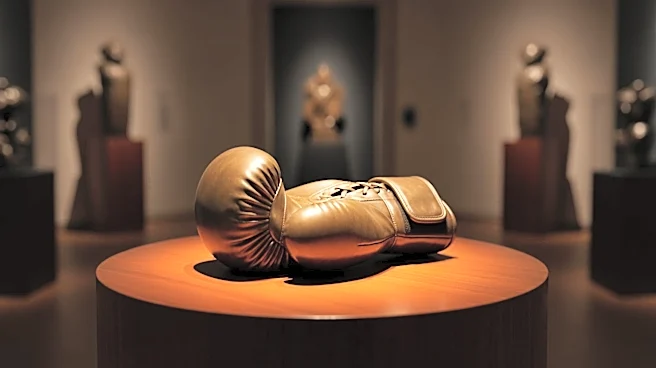
explores the cultural and historical significance of the statue, which has been a point of pilgrimage for visitors worldwide. The museum's relationship with the statue has been complex, as it initially resisted the statue's presence after the filming of the 'Rocky' movies. However, the exhibition aims to place the statue within the broader context of art history and Philadelphia's identity, tracing over 2,000 years of boxing imagery. The exhibition also highlights the global boxing fever of the 1970s and the influence of real-life boxer Joe Frazier on the Rocky character.
Why It's Important?
The decision to embrace the Rocky statue marks a significant shift in the museum's approach to public monuments and popular culture. By acknowledging the statue's cultural impact, the museum is bridging the gap between high art and popular culture, recognizing the importance of public sentiment and cultural symbols. This move could influence other cultural institutions to reconsider their stance on popular culture artifacts. The exhibition also underscores the enduring appeal of the Rocky narrative, which resonates with themes of perseverance and triumph over adversity, reflecting broader societal values. The museum's embrace of the statue may enhance its appeal to a wider audience, potentially increasing visitor numbers and engagement.
What's Next?
Following the exhibition, the Rocky statue will be moved to a permanent location at the top of the museum's steps, a position it has never officially held. This relocation signifies a formal acceptance of the statue as part of the museum's identity. Additionally, a statue of Joe Frazier will replace the Rocky statue at its current location, further cementing the connection between the fictional and real-life boxing legends. The museum's decision may prompt discussions among other cultural institutions about the role of popular culture in art and history, potentially leading to similar exhibitions and initiatives.
Beyond the Headlines
The integration of the Rocky statue into the museum's narrative highlights the evolving nature of cultural heritage and the role of public monuments in shaping collective memory. It raises questions about the criteria for cultural significance and the balance between artistic merit and popular appeal. The exhibition also invites reflection on the power of storytelling in shaping cultural icons and the ways in which fictional narratives can influence real-world perceptions and identities. This development may encourage a reevaluation of other cultural symbols and their place within institutional settings.