



What's Happening?
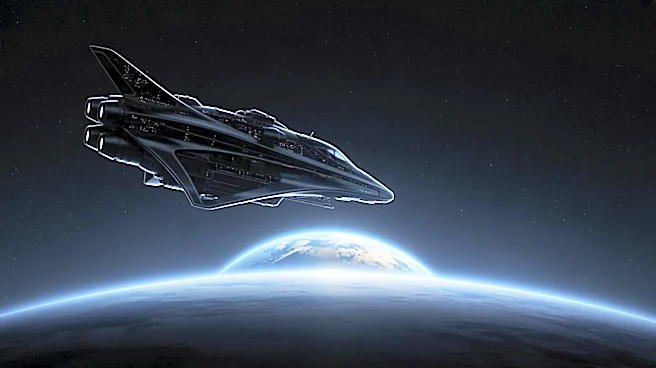
The film 'Project Hail Mary' has sparked interest in the scientific community due to its depiction of interstellar travel and extraterrestrial life. The story follows Ryland Grace, a character played by Ryan Gosling, who embarks on a mission to save Earth
from a cosmic threat. Experts from NASA and other institutions have weighed in on the plausibility of the film's scientific elements, such as long-duration space travel, radiation risks, and the concept of induced comas for astronauts. While some aspects, like the use of artificial gravity and microbial evolution, are grounded in scientific theory, others, such as the rapid recovery from a coma, are deemed unrealistic.
Why It's Important?
The film's exploration of space science highlights the challenges and potential advancements in human space exploration. It brings attention to the ongoing research and technological developments required for long-duration missions, such as those to Mars or beyond. The discussion around radiation protection, muscle atrophy, and psychological effects of space travel is crucial for future missions. This narrative also emphasizes the importance of public engagement with science through popular media, fostering interest and understanding of complex scientific concepts.