
What's Happening?
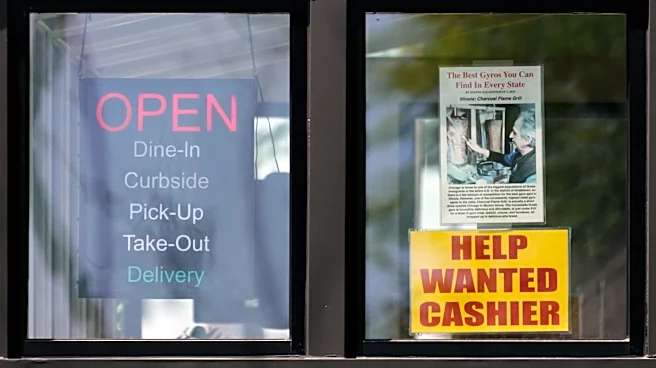
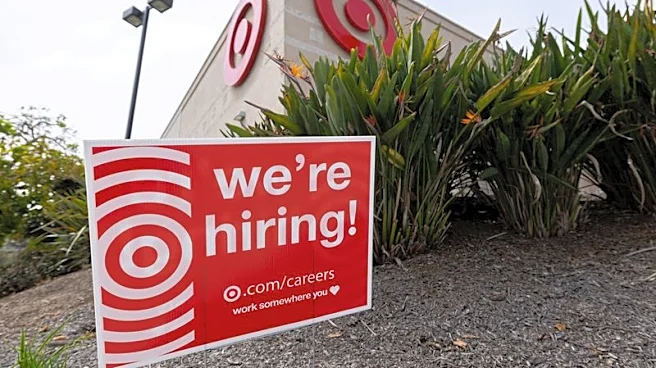
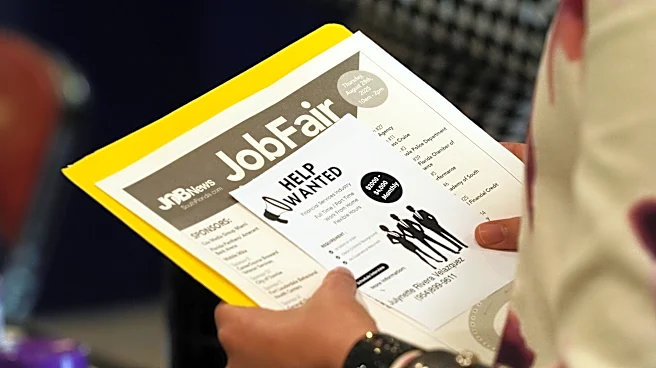
The U.S. job market has demonstrated unexpected resilience, with employers adding 172,000 jobs in May, according to the Labor Department. This figure is nearly double the forecasted amount, maintaining
the unemployment rate at a low 4.3%. Despite this positive job growth, Americans remain concerned about rising inflation, which has seen increases in prices for gasoline, groceries, clothing, and electricity. President Trump, who was reelected on promises to control inflation, faces declining approval ratings as these economic pressures persist. The job gains are widespread, with significant increases in local government, restaurant, and healthcare employment. However, wage growth remains modest, and many Americans continue to struggle with long-term unemployment.
Why It's Important?
The robust job market is a positive indicator for the U.S. economy, suggesting a recovery from the economic downturn of 2025. However, the persistent inflationary pressures pose a significant challenge, potentially undermining consumer confidence and economic stability. The situation is critical for President Trump, whose economic policies are under scrutiny as inflation remains a pressing issue. The Federal Reserve may consider raising interest rates to combat inflation, which could lead to higher borrowing costs for consumers and businesses. This economic environment presents both opportunities and challenges for policymakers and economic stakeholders.
What's Next?
As the U.S. approaches midterm elections, economic conditions will likely play a pivotal role in shaping voter sentiment. The Federal Reserve's potential interest rate hike in December could impact economic growth and consumer spending. Businesses may need to adjust to changing economic conditions, including potential increases in operational costs due to inflation. Policymakers will need to balance efforts to sustain job growth while addressing inflation to maintain economic stability.