







What's Happening?
California's drayage fleets are increasingly adopting electric trucks in response to state regulations and incentives aimed at reducing emissions and promoting sustainable transportation. Companies like Hight Logistics are integrating electric models
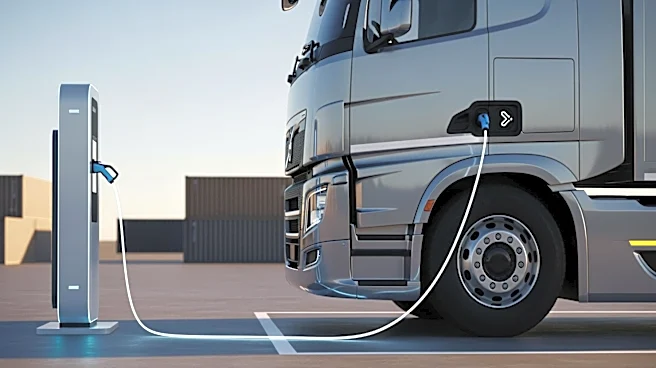
such as the Tesla Semi, Volvo VNR, and BYD trucks into their operations at ports in Los Angeles and Long Beach. The shift is driven by the state's regulatory framework and financial incentives, as well as the rising cost of diesel fuel. Electric trucks offer benefits such as reduced emissions, lower fuel costs, and quieter operation, making them an attractive option for fleet operators.
Why It's Important?
The transition to electric trucks in California's drayage sector is a significant development in the broader effort to reduce transportation emissions and combat climate change. By adopting electric vehicles, fleet operators can mitigate the impact of volatile diesel prices and align with environmental regulations. This shift also supports California's ambitious climate goals and sets a precedent for other states and industries to follow. As more fleets transition to electric, the demand for charging infrastructure and related technologies is expected to grow, driving further innovation and investment in the sector.
What's Next?
As electric truck adoption continues to grow, the development of charging infrastructure will be crucial to support the expanding fleet. Companies are likely to invest in building more charging stations along key freight corridors to alleviate range anxiety and improve operational efficiency. Additionally, as technology advances, electric trucks are expected to become more affordable and offer longer ranges, further encouraging adoption. Policymakers and industry stakeholders will need to collaborate to address challenges and ensure a smooth transition to electric transportation.