
What's Happening?
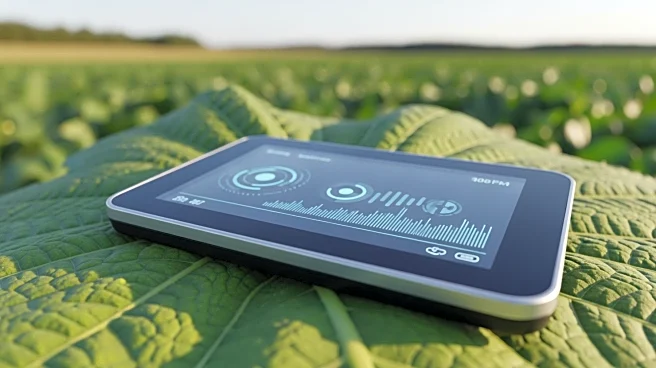
The digital farming software market is projected to experience significant growth, with an anticipated valuation of $16.3 billion by 2030, reflecting a compound annual growth rate (CAGR) of 14.5%. This expansion is driven by the increasing adoption of smart farming solutions, substantial investments in agricultural software platforms, and enhanced governmental support for digital agriculture initiatives. The market is also benefiting from the rising demand for cost-effective farm management and climate-resilient farming techniques. Key trends include the growing use of resource optimization tools, data-driven decision-making in crop management, and the integration of farm financial management systems. Notable companies in this sector include Bayer
AG, Deere & Company, and Yara International ASA, among others.
Why It's Important?
The rapid development of the digital farming software market is crucial for modernizing agriculture, making it more efficient and sustainable. As the industry embraces technology, farmers can optimize resource use, improve crop yields, and reduce environmental impact. This growth supports the agricultural sector's ability to meet increasing food demands while addressing climate change challenges. The integration of AI-driven solutions and predictive analytics enhances decision-making, offering farmers real-time insights and personalized guidance. This technological advancement not only benefits farmers but also contributes to global food security and sustainable agricultural practices.
What's Next?
The digital farming software market is expected to continue evolving with advancements in AI and data analytics. Companies are likely to focus on developing more sophisticated tools that offer comprehensive farm management solutions. The acquisition of Proagrica by TELUS Agriculture & Consumer Goods highlights the trend of consolidation in the industry, aiming to enhance platform capabilities and customer digitization. As the market grows, stakeholders may see increased collaboration between technology providers and agricultural businesses to further integrate digital solutions into farming practices. This could lead to more efficient supply chains and improved sustainability metrics.
Beyond the Headlines
The shift towards digital farming software represents a broader transformation in agriculture, emphasizing sustainability and efficiency. The adoption of these technologies could lead to significant cultural changes within the farming community, as traditional practices are augmented or replaced by data-driven methods. This transition may also raise ethical considerations regarding data privacy and the digital divide, as not all farmers have equal access to these technologies. Long-term, the industry could see a redefinition of agricultural roles, with a greater emphasis on tech-savvy skills and knowledge.