

What's Happening?
Oil prices have slightly decreased as the United States and Iran prepare for a third round of nuclear talks, which has eased fears of potential conflict. Concurrently, President Trump's recent tariff measures have introduced uncertainty regarding global
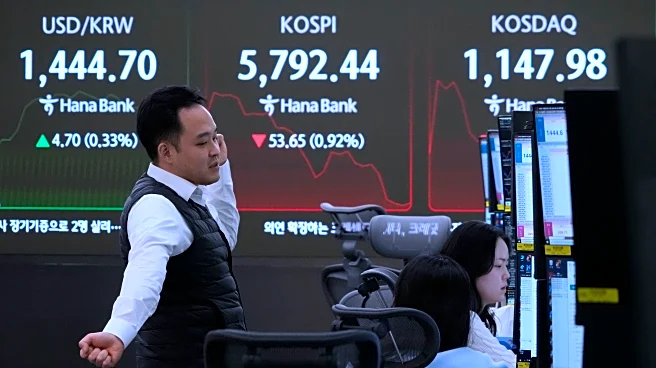
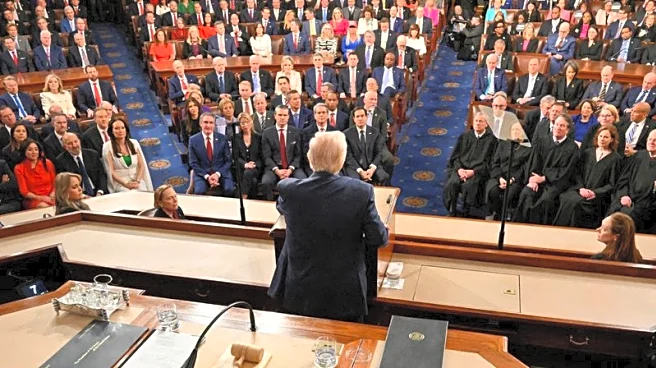
economic growth and fuel demand. Brent crude futures fell by 0.6% to $71.31 a barrel, while U.S. West Texas Intermediate crude also dropped by 0.6% to $66.06. The decline follows a period of increased prices due to concerns over a possible military conflict between the U.S. and Iran, which had pushed prices up by more than 5% the previous week. The U.S. Supreme Court's decision to strike down import tariffs has further contributed to market uncertainty, with President Trump announcing a temporary increase in tariffs from 10% to 15% on U.S. imports from all countries. Analysts suggest that the current market movements are driven by geopolitical concerns rather than an actual shortage of oil.
Why It's Important?
The developments in U.S. tariff policy and the ongoing nuclear talks with Iran have significant implications for global oil markets and economic stability. The uncertainty surrounding tariffs could affect international trade relations and economic growth, impacting industries reliant on global supply chains. Additionally, the outcome of the U.S.-Iran talks could influence geopolitical stability in the Middle East, a key region for oil production. A resolution could lead to the lifting of sanctions on Iran, potentially increasing oil supply and affecting global prices. Conversely, failure to reach an agreement could escalate tensions, leading to further market volatility. Stakeholders in the energy sector, including oil producers and consumers, are closely monitoring these developments as they could have far-reaching economic consequences.
What's Next?
The next round of U.S.-Iran nuclear talks is scheduled for Thursday, which could be pivotal in determining the future of sanctions and oil supply from Iran. Market participants will also be watching for any further announcements from the U.S. government regarding tariff policies, as these could influence economic forecasts and investment decisions. The potential for increased tariffs may prompt reactions from international trade partners, possibly leading to retaliatory measures. Additionally, any escalation in U.S.-Iran tensions could impact oil prices and global energy security. Analysts and policymakers will need to navigate these uncertainties to mitigate risks to economic stability.