
What's Happening?
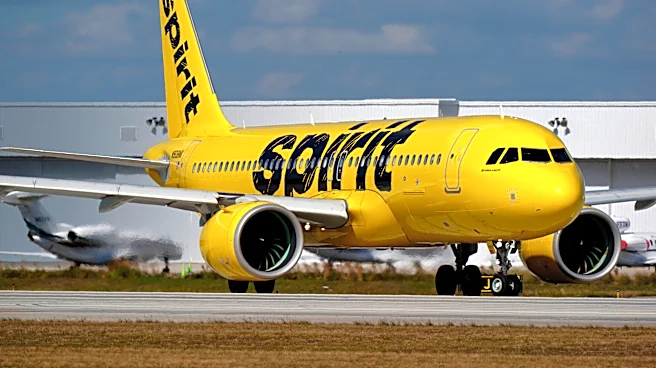
The recent shutdown of Spirit Airlines is anticipated to lead to increased airfares, particularly in markets where the low-cost carrier was a major player. With Spirit's fleet of over 170 aircraft becoming
available through bankruptcy proceedings, other airlines are poised to expand their operations to fill the void left by Spirit. JetBlue and other carriers are already moving to capture Spirit's market share, especially in Florida, where Spirit had a significant presence. The redeployment of Spirit's aircraft is expected to take time, and the immediate impact will likely be higher ticket prices as airlines adjust to the new market dynamics.
Why It's Important?
Spirit Airlines' exit from the market removes a key low-cost competitor, which is likely to result in higher airfares as remaining airlines face less pressure to keep prices low. This change could disproportionately affect cost-sensitive travelers who relied on Spirit's affordable options. The redistribution of Spirit's aircraft and routes will also influence the competitive landscape, potentially leading to increased consolidation in the airline industry. As airlines like JetBlue expand to capture Spirit's former customers, the market may see shifts in service offerings and pricing strategies.
What's Next?
The process of reallocating Spirit's aircraft will unfold over several months, with potential delays due to the complexities of bankruptcy proceedings. Airlines will need to strategically decide how to integrate these assets into their fleets. In the meantime, passengers can expect higher fares and potentially reduced service options in some markets. The long-term effects will depend on how quickly airlines can adapt and whether new entrants emerge to fill the low-cost niche vacated by Spirit. Additionally, the potential for further industry consolidation could reshape the competitive dynamics in the U.S. airline market.