







What's Happening?
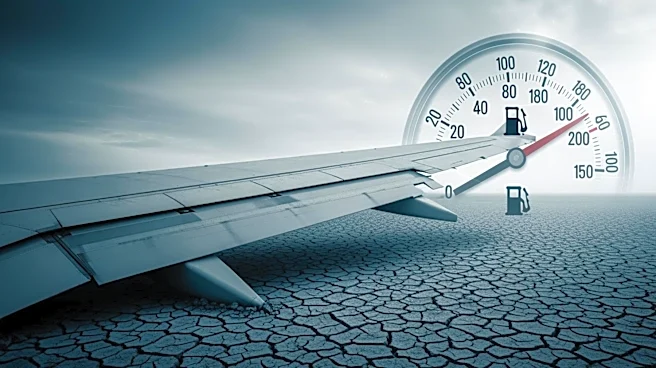
Jet fuel prices have surged, doubling in just eight weeks, posing significant challenges for the airline industry where fuel typically accounts for 20-30% of operating costs. This price hike is compounded by a looming supply crunch, with officials warning
that parts of Europe could face shortages within weeks, and the situation in some Asian countries is even more dire. The International Energy Agency has highlighted the war in Iran as a major factor, contributing to what is being described as the biggest energy crisis in history. As the first-quarter earnings season progresses, airline executives are preparing to address investor and analyst concerns about how they are managing this fuel crisis. Historical comparisons are being drawn to previous fuel shocks since the 1970s to understand potential outcomes.
Why It's Important?
The doubling of jet fuel prices and potential supply shortages could have far-reaching impacts on the airline industry, affecting profitability and operational strategies. Airlines may face increased pressure to raise ticket prices, which could dampen demand and affect travel patterns. The crisis underscores the vulnerability of global supply chains and the airline industry's dependence on stable fuel prices. This situation could lead to a reevaluation of fuel sourcing strategies and increased investment in alternative energy sources. The broader economic implications include potential disruptions in global trade and tourism, affecting related industries and economies dependent on these sectors.
What's Next?
Airline executives are likely to explore various strategies to mitigate the impact of rising fuel costs, including hedging fuel prices, optimizing flight routes, and investing in more fuel-efficient aircraft. There may also be increased lobbying for government intervention or support to stabilize fuel prices. The industry will closely monitor geopolitical developments, particularly in the Middle East, as these could further influence fuel supply and pricing. Additionally, airlines may accelerate efforts to adopt sustainable aviation fuels as a long-term solution to fuel volatility.