
What's Happening?
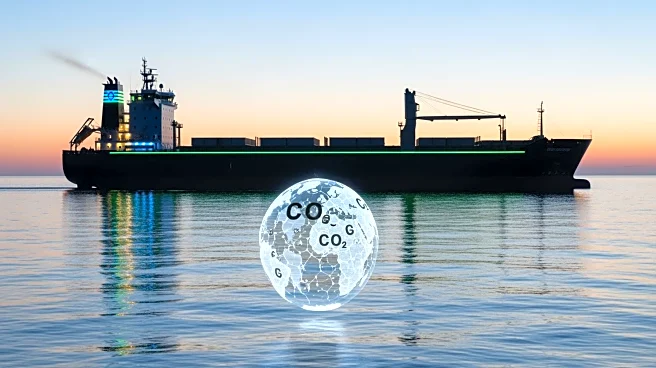
DNV, Equinor, and TotalEnergies have announced the commencement of the second phase of the CETO (CO2 Efficiently Transported via Ocean) joint industry project. This phase aims to further de-risk the low-pressure
CO2 transport chain, focusing on CO2 composition. The project is financially supported by GASSNOVA through the CLIMIT programme. The first phase, completed in July 2024, demonstrated the feasibility of shipping CO2 at low-pressure conditions. However, a dedicated product specification for low-pressure CO2 is still needed, as it impacts chain design, material selection, and operations. The second phase will generate experimental data to support the development of CO2 product specifications for ship-based carbon capture and storage (CCS) transport value chains at low pressure.
Why It's Important?
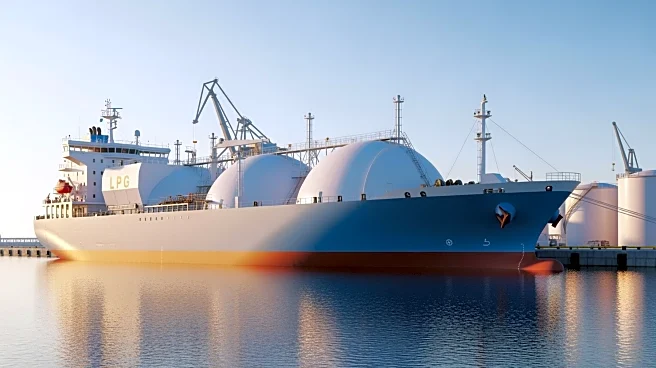
The ability to transport CO2 at scale is critical for carbon capture and storage (CCS) to reach its full potential as an emissions reduction solution. While pipelines are effective for shorter distances, ship transport is necessary when capture sources and storage sites are not easily connected. The CETO project addresses this need by developing a low-pressure value chain for large-scale CO2 ship transport. This initiative is vital for scaling the use of CCS, which is a key strategy in reducing global carbon emissions. The project's outcomes will help identify the specifications needed to support reliable and robust low-pressure CO2 shipping operations, potentially influencing future industry standards and practices.
What's Next?
The second phase of the CETO project will focus on generating data to support the development of CO2 specifications, particularly regarding chemical reactions and solubility limits of acids. This will enhance the understanding of the effect of impurities in the CO2 stream under shipping conditions. The project aims to fill knowledge gaps in the industry and attract new partners to expand its scope. The collaboration between DNV, Equinor, and TotalEnergies is expected to continue, with hopes of involving additional partners to address other key topics related to CO2 carrier design and operation.