
What's Happening?
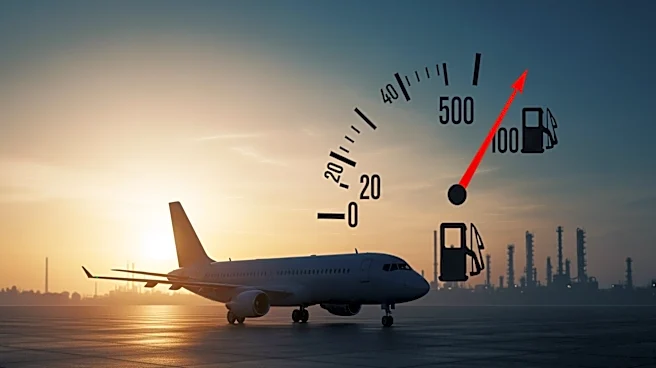
The U.S. airline industry is experiencing a significant increase in fuel costs, with expenses rising by more than 56% since the onset of the Iran war. According to the Department of Transportation’s Bureau
of Transportation Statistics, the industry spent $5.06 billion on fuel in March, up from $3.23 billion in February. The average cost of a gallon of jet fuel increased by 30.9% during this period, reaching $3.13 per gallon. This surge in fuel prices has led to higher fares and ancillary fees for travelers, and has particularly impacted ultra-low-cost carriers like Spirit Airlines, which has ceased operations due to unsustainable fuel expenses.
Why It's Important?
The sharp rise in fuel costs is having a profound impact on the U.S. airline industry, leading to increased ticket prices and additional fees for consumers. This financial strain is prompting discussions about potential industry consolidation, as major carriers consider partnerships or mergers to survive the economic pressure. Smaller airlines are at risk of being pushed out of the market, which could reduce competition and lead to higher prices for consumers in the long term. The situation underscores the vulnerability of the airline industry to geopolitical events and fluctuating fuel prices.
What's Next?
As the conflict in Iran continues, the airline industry may face further financial challenges. Major carriers are likely to explore strategic alliances or mergers to mitigate the impact of rising costs. Additionally, there may be increased lobbying for government intervention or support to stabilize the industry. The potential for further consolidation could reshape the competitive landscape of the airline sector, affecting pricing and service options for consumers.