

What's Happening?
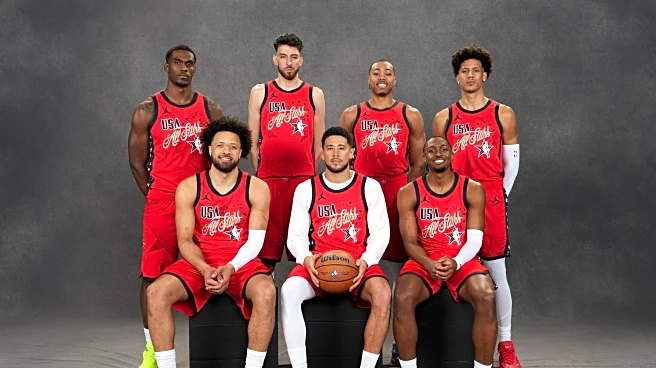
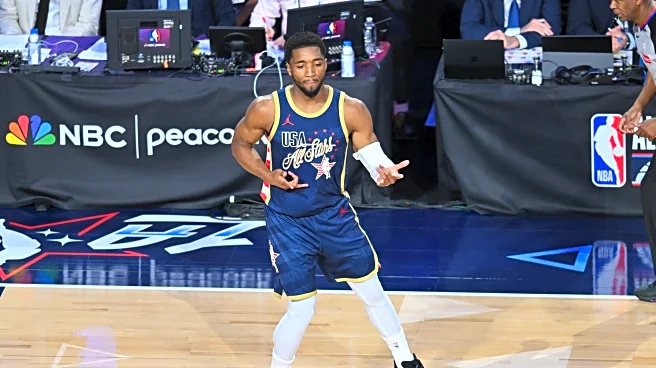
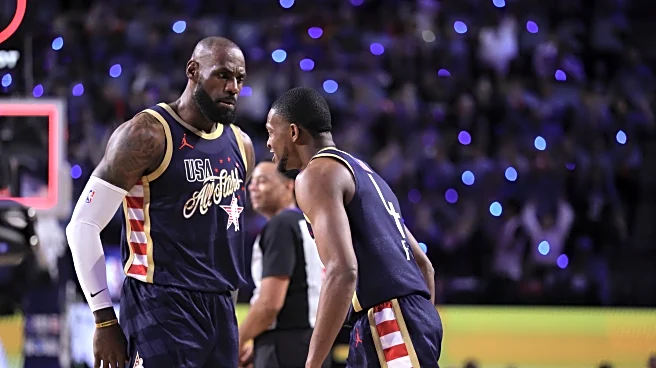
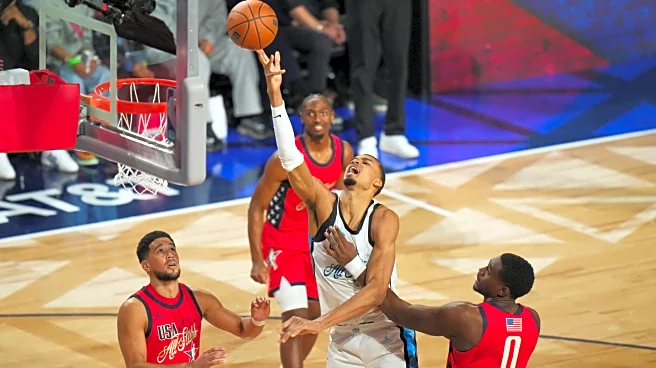
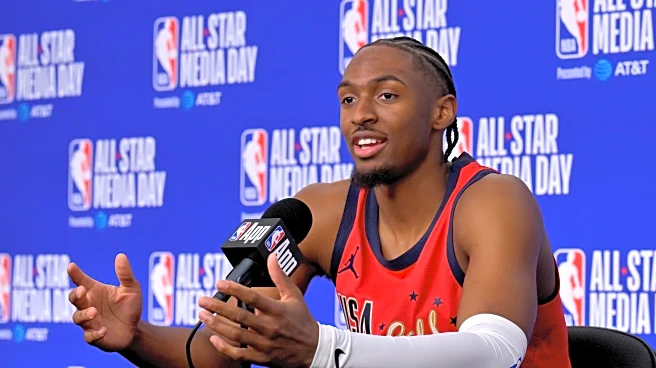
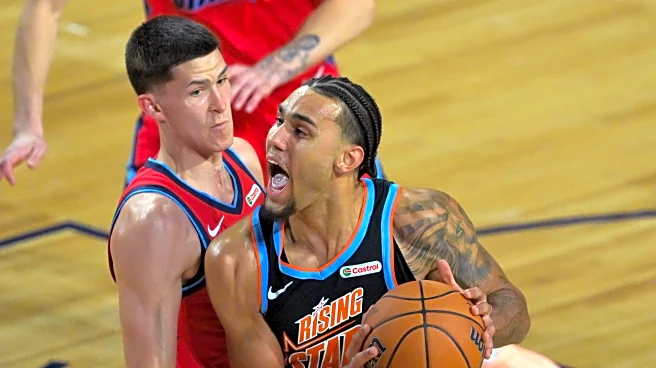
In a revamped NBA All-Star Game format, the USA Stars, led by Anthony Edwards of the Minnesota Timberwolves, triumphed over the USA Stripes with a decisive 47-21 victory. The event, held at the Intuit Dome in Inglewood, California, featured a three-team round-robin tournament with short 12-minute games, including Team World composed of international players. Edwards, who scored 32 points across the tournament, was named MVP. The USA Stars avenged an earlier defeat to the USA Stripes, showcasing strong performances from players like Tyrese Maxey of the Philadelphia 76ers and Chet Holmgren of the Oklahoma City Thunder. The new format, which previously featured a four-team bracket, aims to bring fresh excitement to the All-Star festivities.
Why It's Important?
The
introduction of a new format in the NBA All-Star Game reflects the league's ongoing efforts to innovate and maintain fan engagement. By incorporating a round-robin style and shorter games, the NBA seeks to enhance the entertainment value and competitiveness of the event. This change could influence future All-Star Games and potentially attract a broader audience. For players, it offers a platform to showcase their skills in a dynamic setting, potentially impacting their marketability and career opportunities. The success of this format could lead to further experimentation in other NBA events or even regular-season games.
What's Next?
Following the success of this year's All-Star Game format, the NBA may consider additional changes to future All-Star events. Stakeholders, including team owners, players, and fans, will likely evaluate the impact of these changes on viewership and player performance. The league might explore similar innovations in other aspects of the game to keep the sport evolving. Feedback from this event could lead to further adjustments in the All-Star Game structure, aiming to balance entertainment with competitive integrity.