
What's Happening?
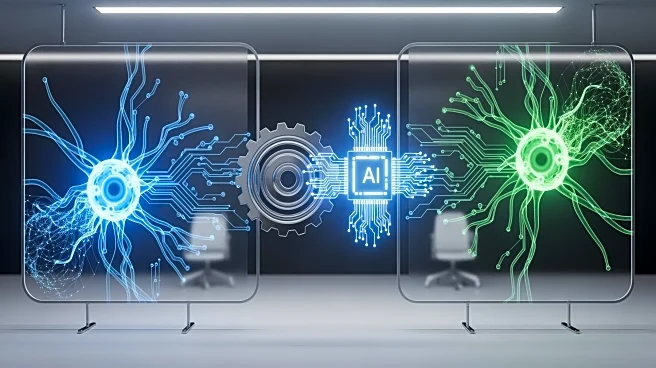
A recent study has identified three distinct styles of human-AI collaboration in business settings: Cyborgs, Centaurs, and Self-Automators. The study, conducted with 244 consultants using GPT-4, found
that these styles have different implications for performance and skill development. Cyborgs engage in continuous dialogue with AI, Centaurs use AI selectively while maintaining control, and Self-Automators delegate tasks entirely to AI. The research highlights the need for businesses to understand these collaboration modes to maximize the benefits of AI while maintaining human expertise.
Why It's Important?
Understanding the different modes of human-AI collaboration is crucial for businesses aiming to leverage AI effectively. Each style has unique impacts on performance and skill development. Cyborgs and Centaurs, who maintain active engagement with AI, tend to develop new skills and produce higher-quality outputs. In contrast, Self-Automators risk losing expertise by over-relying on AI. For businesses, fostering the right collaboration style can enhance productivity and innovation while preserving critical human judgment and creativity. This understanding is vital as AI becomes more integrated into business processes, potentially reshaping industries and competitive landscapes.
What's Next?
Businesses should assess their current AI collaboration practices and align them with strategic objectives. Encouraging Cyborg and Centaur behaviors can help maintain a balance between AI efficiency and human expertise. Companies should also invest in training programs that develop both AI fluency and domain expertise. Monitoring for automation complacency is essential to prevent the erosion of critical skills. As AI technology continues to evolve, businesses that master human-AI collaboration will likely gain a competitive edge, driving innovation and growth in their respective industries.