
What's Happening?
LG Electronics has introduced its latest AI-powered in-vehicle solutions at CES 2026, earning a Best of Innovation Award in the In-Vehicle Entertainment category. The company showcased its software-defined
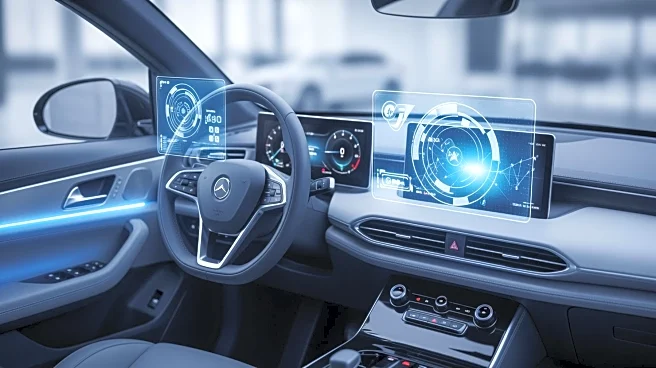
vehicle and intelligent in-cabin technologies, which include three core systems: displays, driver monitoring, and entertainment. The mobility display solution transforms the windshield into a display surface for real-time driving information and mixed-reality content during autonomous operation. Additionally, the automotive vision solution employs eye-tracking and interior sensing to monitor driver attention and passenger states, enabling adaptive safety functions and personalized interactions. The in-vehicle entertainment system allows seamless content streaming between home and vehicle, facilitating communication through vehicle side windows. LG's on-device multimodal generative AI platform is designed to create individualized experiences throughout journeys.
Why It's Important?
The introduction of these AI-powered solutions by LG represents a significant advancement in the automotive industry, particularly in enhancing the autonomous driving experience. By integrating real-time information displays and adaptive safety features, these technologies aim to improve both driver and passenger safety and comfort. The ability to stream content seamlessly between home and vehicle also highlights a shift towards more connected and integrated living environments. This development could influence other automotive manufacturers to adopt similar technologies, potentially leading to widespread changes in how vehicles are designed and experienced. The focus on personalized interactions and adaptive safety functions underscores the growing importance of AI in creating more intuitive and responsive automotive environments.
What's Next?
As LG continues to develop and refine its AI-powered in-vehicle solutions, the company may seek partnerships with automotive manufacturers to integrate these technologies into future vehicle models. The success of these solutions at CES 2026 could lead to increased interest and investment in AI-driven automotive innovations. Additionally, regulatory bodies may need to consider new guidelines and standards to ensure the safe implementation of such advanced technologies in vehicles. The broader adoption of these solutions could also prompt further research and development in AI applications for other aspects of transportation and mobility.