
What's Happening?
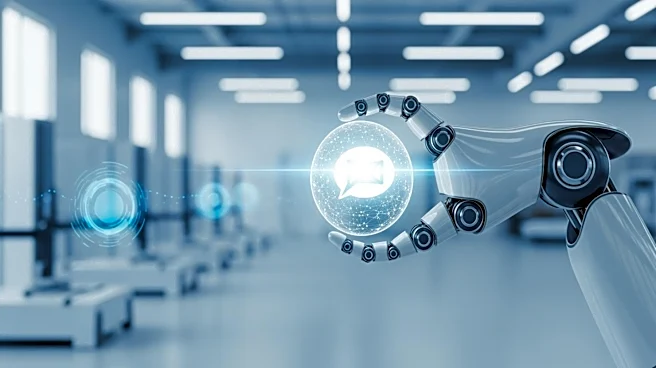
Amazon has announced significant advancements in its Proteus autonomous mobile robot (AMR), now equipped with natural-language processing capabilities. This development allows Proteus to understand and execute
verbal commands, enhancing its functionality in material handling tasks. The announcement was made at Amazon's Delivering the Future event in London. Proteus, initially introduced in 2022, is designed to move heavy carts and assist in warehouse operations. The robot is currently operational in 24 U.S. fulfillment centers. Alongside Proteus, Amazon is expanding its Vulcan picking robot and STARK tote-handling system across Europe, aiming to improve efficiency and safety in its logistics operations.
Why It's Important?
The integration of natural-language capabilities into Proteus represents a significant leap in robotics, potentially transforming warehouse operations by reducing the need for specialized programming skills. This advancement could lead to increased productivity and safety, as robots take on more complex tasks, allowing human workers to focus on higher-value activities. Amazon's expansion of robotic systems in Europe underscores its commitment to modernizing its logistics infrastructure, which could enhance its competitive edge in the e-commerce sector. The investment in robotics also highlights the growing trend of automation in supply chain management, which could influence industry standards and practices.
What's Next?
Amazon plans to deploy the updated Proteus system in Europe by the first half of next year, alongside the expansion of Vulcan and STARK systems. The company is investing over €10 billion in modernizing its European operations, which includes hiring 25,000 new employees. This expansion is expected to bolster Amazon's operational capabilities and customer service in the region. As Amazon continues to innovate, other companies in the logistics and e-commerce sectors may follow suit, potentially leading to widespread adoption of advanced robotics technologies. The focus on automation could also spark discussions on workforce implications and the future of labor in automated environments.