







What's Happening?
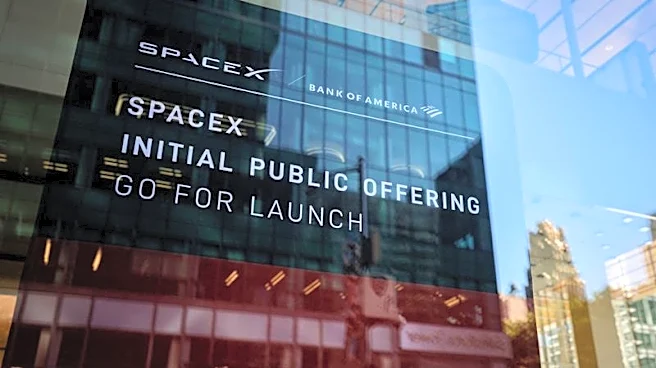
Space Exploration Technologies Corp. (SpaceX) completed the largest initial public offering (IPO) in stock market history on June 12, 2026. The company raised $75 billion by selling 555,555,555 new shares at $135 each, achieving a valuation of $1.75 trillion.
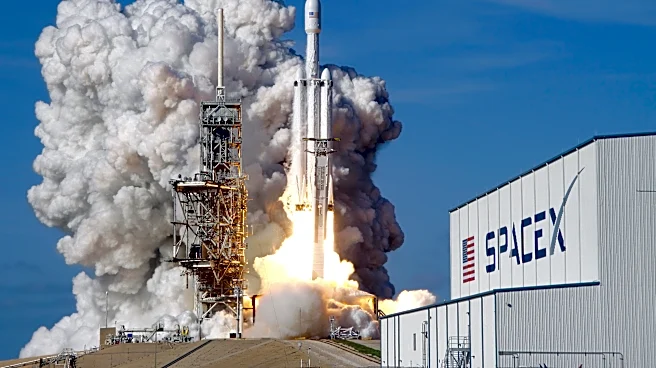
On its first day of trading, SpaceX shares opened at $150, peaked at $176.52, and closed near $161, marking a 19% increase and briefly pushing the market capitalization above $2 trillion. The IPO was led by Goldman Sachs, with Morgan Stanley, Bank of America Securities, Citigroup, and JPMorgan Chase as joint book-running managers. Elon Musk, who holds the largest economic stake in SpaceX, became the world's first trillionaire following the IPO. The company operates across three main segments: reusable launch vehicles, satellite broadband (Starlink), and AI and compute infrastructure, following the integration of xAI.
Why It's Important?
The successful IPO of SpaceX marks a significant milestone in the commercial space industry, highlighting the growing investor confidence in space exploration and related technologies. The substantial capital raised will enable SpaceX to further develop its Starship program and expand its Starlink satellite network, potentially revolutionizing global internet connectivity. The IPO also underscores the increasing importance of AI and compute infrastructure in SpaceX's business model, as the company aims to leverage space-based solar power and connectivity for large-scale AI operations. The dual-class share structure, which gives Elon Musk significant control, has drawn attention from institutional investors, reflecting ongoing debates about corporate governance in high-profile tech companies.
What's Next?
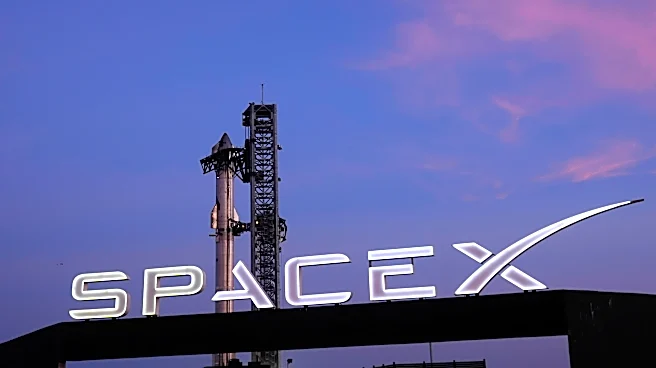
SpaceX's future will likely focus on achieving reliable, high-cadence operations with its Starship program, which is crucial for reducing launch costs and increasing payload capacity. The company will also need to navigate regulatory approvals from agencies like the FAA and FCC, as well as manage competition in both the launch services and broadband markets. The success of SpaceX's AI and compute infrastructure initiatives will be closely watched, as they represent a significant shift in the company's business strategy. Investors and analysts will monitor SpaceX's ability to maintain its growth trajectory and achieve profitability, particularly in light of the heavy capital expenditures required for its ambitious projects.