
What's Happening?
Vincent van Gogh, the renowned Dutch painter, is known for his unique approach to signing his artworks. A recent study by art historian Julia Engelmayer reveals that Van Gogh signed only 16% of his paintings,
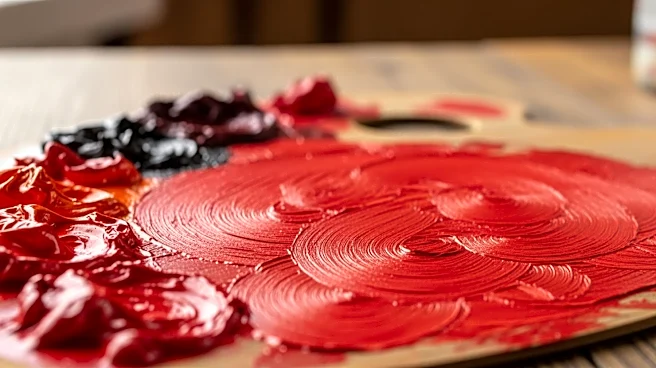
a notably low proportion for artists of his time. He often used his first name 'Vincent' instead of his full name, a choice influenced by strained family relations and the difficulty non-Dutch speakers had in pronouncing 'Van Gogh'. Additionally, Van Gogh frequently used red for his signatures, a color choice that was uncommon among artists. This preference for red aligns with his love for color contrasts, as seen in his painting 'Seascape near Les Saintes-Maries-de-la-Mer'. The study also notes that Van Gogh's signatures were often angled, creating a sense of imbalance in his compositions.
Why It's Important?
Understanding Van Gogh's signature style offers insights into his personal and artistic identity. His choice to use only his first name reflects his desire to distance himself from his family and establish a unique identity. The use of red in his signatures highlights his innovative approach to color, which has influenced countless artists. This study not only enriches the appreciation of Van Gogh's work but also contributes to the broader understanding of art history and the personal narratives that shape artistic expression. Collectors and art historians gain valuable context for evaluating Van Gogh's paintings, particularly when considering the significance of a signed piece in the art market.