
What's Happening?
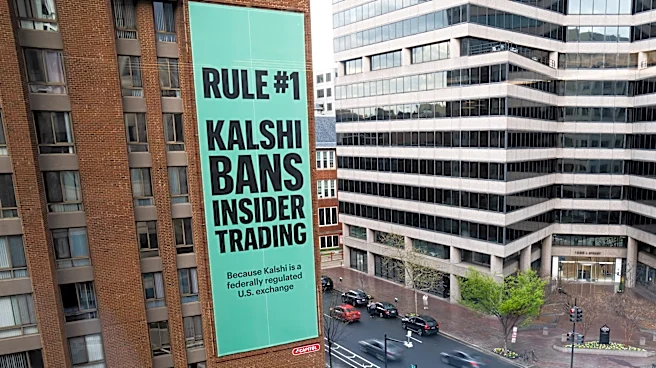
Recent developments have highlighted ongoing concerns about insider trading within prediction markets. Several high-profile cases have emerged, including three congressional candidates fined and suspended
from Kalshi for betting on their own elections, and a U.S. Army soldier indicted for using classified information to profit on Polymarket. Despite efforts by companies like Kalshi and Polymarket to enforce rules and collaborate with authorities, critics remain unconvinced. The Senate has passed a resolution banning senators and their staff from trading on these platforms, reflecting broader concerns about the legitimacy and ethical implications of prediction markets.
Why It's Important?
The scrutiny of prediction markets underscores significant ethical and regulatory challenges. These platforms, which some argue serve as financial hedging tools, are viewed by critics as akin to gambling. The insider trading cases have intensified calls for stricter regulations, with lawmakers like Senator Chris Murphy and Representative Greg Casar advocating for a complete ban on such markets. The controversy highlights the tension between innovation in financial markets and the need for regulatory oversight to prevent misuse and protect the integrity of public institutions.
What's Next?
As prediction markets continue to face criticism, further legislative actions are likely. Companies may need to enhance their compliance measures and transparency to regain trust. The ongoing debate could lead to more stringent regulations or even a ban on certain types of prediction markets. Stakeholders, including lawmakers and market operators, will need to navigate these challenges to balance innovation with ethical considerations.