





What's Happening?
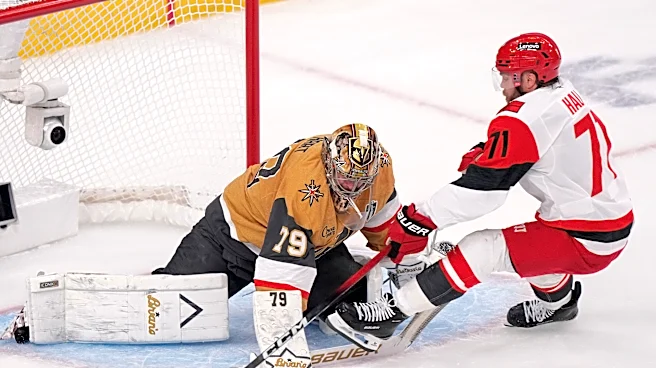
Petr Cech, a legendary Czech football goalkeeper known for his time with the Czech Republic national team and clubs like Arsenal, has transitioned from soccer to ice hockey. Cech, who retired from professional soccer in 2019, is now playing as a goalie
for the Haringey Huskies in the NIHL Division 2 South, a second-tier British hockey league. Despite his new sport, Cech remains an athlete at heart, leveraging his reflexes and height to adapt to the ice. His move to hockey follows a distinguished soccer career, where he was recognized as one of the greatest goalkeepers, known for his signature headgear worn after a head injury early in his career.
Why It's Important?
Cech's transition from soccer to ice hockey highlights the versatility and adaptability of professional athletes. His move is significant as it underscores the potential for athletes to extend their careers by switching sports, especially in roles that utilize similar skills, such as goalkeeping. This shift also brings attention to lesser-known sports leagues, like the NIHL Division 2 South, potentially increasing their visibility and popularity. For fans of Cech, this transition offers a new way to follow his career, while also inspiring other athletes to consider alternative paths post-retirement from their primary sport.
What's Next?
As Cech continues his journey in ice hockey, it will be interesting to see how he develops in this new sport and whether his presence will attract more attention to the league. His performance could influence other retired athletes to explore similar transitions, potentially leading to a trend of cross-sport career extensions. Additionally, Cech's involvement in hockey might inspire collaborations or events that bridge soccer and hockey communities, fostering a unique sports culture.
Beyond the Headlines
Cech's career change also raises questions about the physical and mental demands of switching sports at a professional level. It highlights the importance of adaptability and continuous learning for athletes, as well as the potential for sports to offer lifelong engagement beyond traditional career timelines. This move could also spark discussions on the support systems available for athletes transitioning between sports, emphasizing the need for comprehensive training and development programs.