






What's Happening?
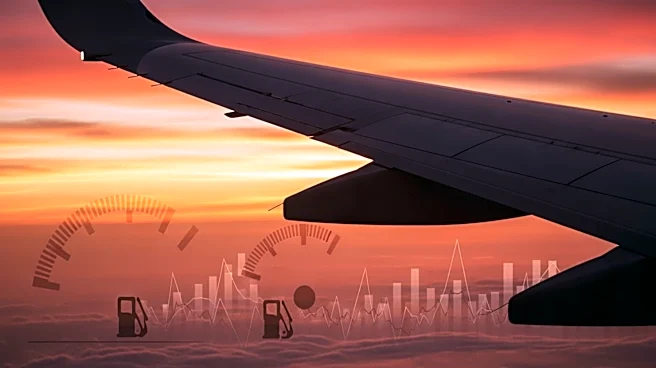
Airfare-prediction services like Hopper, Kayak, and Google Flights are facing challenges in providing reliable guidance during an unusually volatile travel season. These services, which rely on historical price data, are struggling to adapt to the current
market conditions marked by surging oil prices and disruptions in the Middle East. The closure of the Strait of Hormuz has led to increased fuel costs, creating a structural break that historical models did not anticipate. As a result, the accuracy of these prediction tools has diminished, leaving travelers uncertain about the best time to book flights.
Why It's Important?
The difficulties faced by airfare-prediction apps highlight the limitations of relying solely on historical data in dynamic and unpredictable markets. This situation underscores the need for more adaptive models that can incorporate real-time data and external factors such as geopolitical events and supply chain disruptions. The reduced reliability of these tools may lead to decreased consumer trust and increased reliance on human judgment for travel planning. This development also emphasizes the broader challenges faced by industries that depend on predictive analytics in volatile environments.
What's Next?
Airfare-prediction services may need to enhance their models by integrating exogenous data streams, such as fuel prices and macroeconomic indicators, to improve accuracy. Providers might also consider offering more transparent uncertainty and confidence bands to users. Researchers and industry experts could publish evaluations of model performance before and after identified shocks to guide future improvements. In the absence of vendor disclosures, independent backtests and user reports will be crucial in assessing the predictive value of these tools.