







What's Happening?
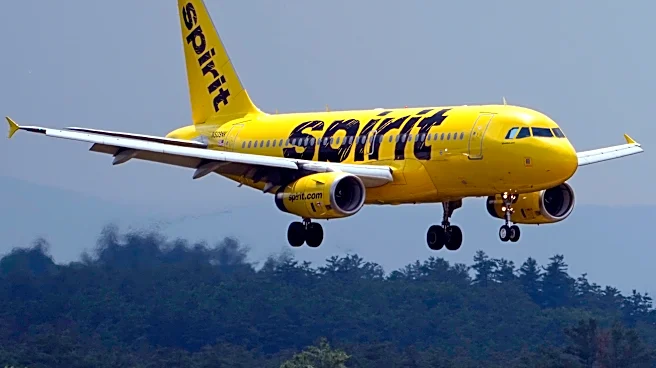
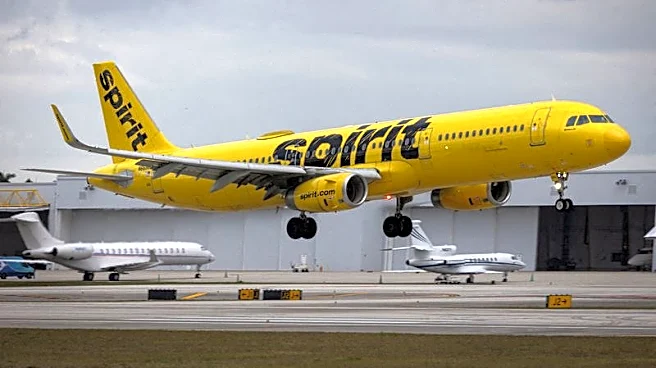
Spirit Airlines is preparing to shut down operations after a $500 million bailout deal with the Trump administration fell apart. The budget airline has been unable to secure sufficient funding from the government and bondholders to continue operations.
The proposed deal would have given the government a significant stake in Spirit, potentially allowing the use of its fleet for military missions. However, internal disagreements within the Trump administration and opposition from bondholders have stalled the bailout. Spirit's financial struggles have been exacerbated by rising fuel costs and heavy debt, leading to its current predicament.
Why It's Important?
The shutdown of Spirit Airlines would have significant implications for the U.S. aviation industry and consumers. As a major budget carrier, Spirit has played a key role in providing affordable travel options and maintaining competitive pricing in the market. Its closure could lead to higher airfares and reduced travel options, particularly affecting budget-conscious travelers. The situation also raises questions about the role of government intervention in private sector bailouts and the potential consequences of such actions. The loss of Spirit would also impact its employees and the communities it serves, leading to economic disruptions.
What's Next?
If Spirit Airlines ceases operations, other airlines may step in to fill the gap, potentially leading to increased consolidation in the industry. The Trump administration's decision on the bailout could influence future government policies on financial assistance to struggling companies. The outcome of this situation will be closely watched by industry stakeholders, policymakers, and consumers. The aviation sector may undergo significant changes as airlines adjust to the new market dynamics.