




What's Happening?
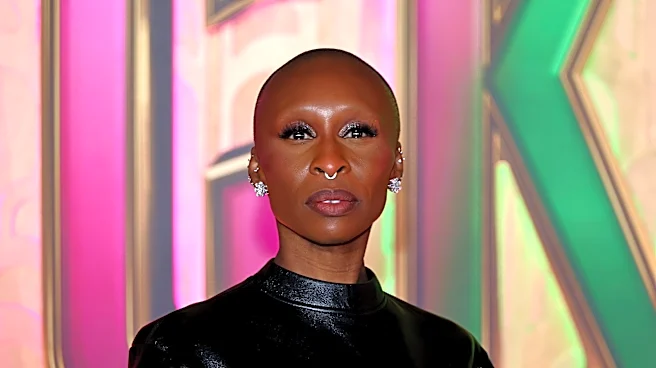
Cynthia Erivo, a British actress and singer, has decided to withdraw from campaigning for an Oscar for her role in 'Wicked: For Good.' This decision follows an incident during a press tour in Singapore, where Erivo defended her co-star Ariana Grande from an individual
who breached security. The aftermath of this event led to Erivo facing significant criticism and negative attention, particularly on social media platforms. She described the experience as feeling like her humanity was 'bastardized,' with memes and videos targeting her appearance and actions. Despite the challenges, Erivo emphasized the strong bond she shares with Grande, noting that they have supported each other throughout their work on the 'Wicked' films.
Why It's Important?
Erivo's withdrawal from the Oscar campaign highlights the intense scrutiny and pressure faced by public figures, particularly women of color, in the entertainment industry. The incident underscores the broader issues of media portrayal and public perception, where actions can be misinterpreted or criticized based on stereotypes. This situation also reflects the personal toll that such public scrutiny can have on individuals, influencing their professional decisions and mental well-being. Erivo's experience may resonate with others in the industry, prompting discussions about the support systems available for artists facing similar challenges.
What's Next?
While Erivo has stepped back from the Oscar campaign, her career continues to thrive, with ongoing projects and collaborations. The incident may lead to increased awareness and dialogue within the entertainment industry about the impact of public criticism and the need for supportive environments for artists. Additionally, Erivo's decision could inspire other artists to prioritize their well-being over industry accolades, potentially influencing how future campaigns are approached.
Beyond the Headlines
The incident involving Erivo and Grande also raises questions about security measures at public events and the responsibilities of event organizers to protect artists. Furthermore, it highlights the role of social media in shaping public narratives and the potential for misinformation or harmful content to spread rapidly. This case may prompt a reevaluation of how incidents are reported and discussed online, as well as the ethical considerations of media coverage.