






What's Happening?
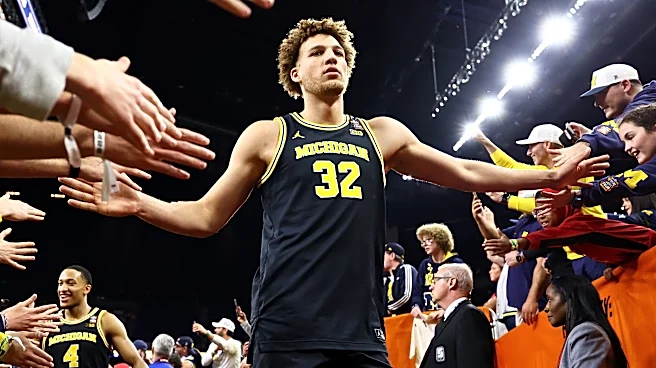
In a dramatic display of resilience, Michigan Wolverines' star forward Yaxel Lendeborg played through significant injuries to help his team secure the national title. During the Final Four game against Arizona, Lendeborg suffered a sprained left knee
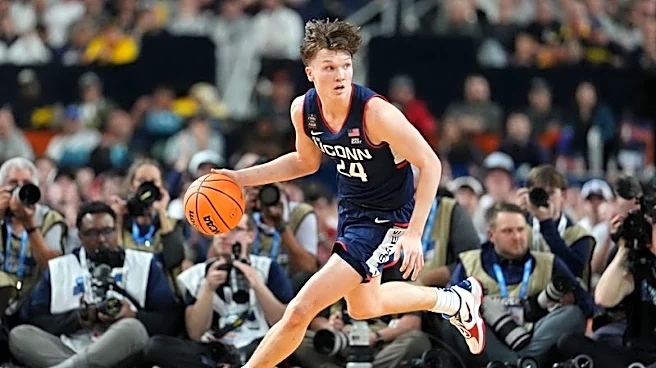
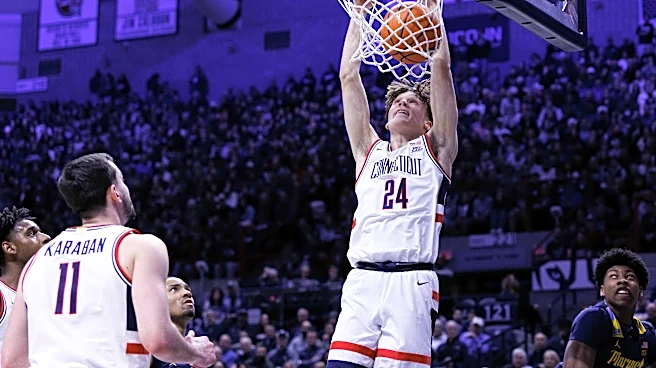
and ankle after landing awkwardly on an opponent's foot. Despite the injuries, he returned to the court, contributing crucial points that helped Michigan advance to the championship game. His determination was highlighted in the Paramount-Plus documentary 'Made for March,' which detailed his decision-making process and the support from teammate LJ Cason, who himself was sidelined with an ACL injury. Lendeborg's performance in the title game against UConn was pivotal, as he scored 13 points to secure Michigan's first national championship since 1989.
Why It's Important?
Lendeborg's decision to play through pain underscores the intense dedication and sacrifice athletes often make for their teams. His actions not only inspired his teammates but also highlighted the physical and mental challenges faced by college athletes. This victory is significant for Michigan, marking a major achievement for the program and its coach, Dusty May, in his second season. The win could enhance the university's reputation, potentially influencing recruitment and funding. For Lendeborg, this moment could be a defining point in his career, showcasing his resilience and leadership, which may impact his future prospects in professional basketball.
What's Next?
Following this victory, Michigan will likely focus on maintaining its competitive edge in college basketball. The team's success could lead to increased interest from top recruits, eager to join a championship-winning program. For Lendeborg, the next steps may involve recovery and preparation for a potential professional career, where his performance under pressure will be a valuable asset. The coaching staff, led by Dusty May, will aim to build on this success, strategizing for future seasons to sustain their winning momentum.
Beyond the Headlines
Lendeborg's story raises broader questions about the pressures on college athletes to perform despite injuries, highlighting the need for balanced decision-making between personal health and team success. It also reflects on the role of leadership and support within a team, as demonstrated by LJ Cason's guidance. This narrative may influence discussions on athlete welfare and the ethical considerations of playing through injuries, potentially impacting policies and practices in collegiate sports.