

What's Happening?
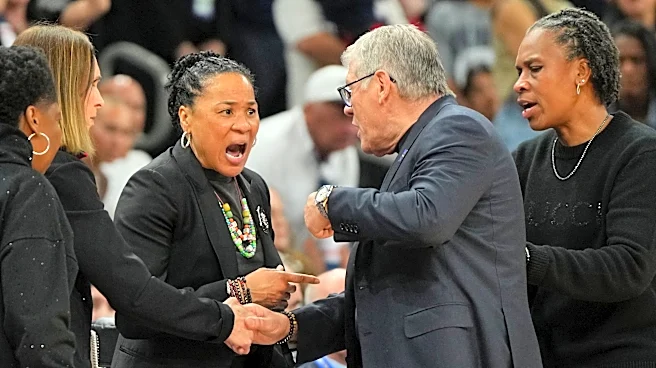
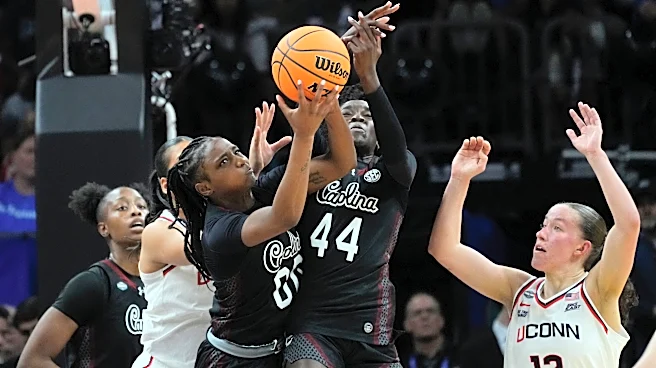
In a dramatic encounter during the NCAA Women's Final Four, South Carolina's coach Dawn Staley and UConn's coach Geno Auriemma engaged in a tense exchange following South Carolina's 62-48 victory over UConn. The incident occurred in the final moments
of the game when Auriemma approached Staley, appearing visibly upset, and chastised her before the two shook hands. The confrontation was reportedly about the absence of a traditional pregame handshake, which Auriemma claimed was overlooked by Staley. Staley, however, expressed confusion over the incident, stating she had no intention of disrespect and had greeted Auriemma's staff pregame. The exchange quickly gained attention on social media, with notable figures like Hall of Famer Lisa Leslie commenting on the situation. Despite the tension, both coaches have a history of mutual respect, having led their teams to numerous championships and victories over the years.
Why It's Important?
This incident highlights the intense rivalry and high stakes involved in women's college basketball, particularly between two of the sport's most successful coaches. The exchange underscores the pressure and emotions that accompany high-profile games, especially in the Final Four. The public nature of the confrontation and its spread on social media reflect the growing visibility and scrutiny of women's sports. This event could influence perceptions of sportsmanship and professionalism in coaching, potentially affecting how future interactions between coaches are viewed. Additionally, it brings attention to the protocols and traditions in sportsmanship, emphasizing the importance of maintaining decorum even in competitive environments.
What's Next?
South Carolina will advance to play UCLA in the championship game, marking their third consecutive title game appearance. The focus will likely shift back to the on-court performances as both teams prepare for the final showdown. However, the incident between Auriemma and Staley may continue to be a topic of discussion, potentially prompting conversations about sportsmanship and coaching conduct in collegiate sports. Both coaches may address the situation further, either through public statements or in future interactions, to clarify their positions and move past the incident.