

What's Happening?
Volkswagen has announced a halt in the U.S. production of its ID.4 electric vehicle due to a decrease in demand for EVs. This decision comes as part of a broader trend affecting the automotive industry, where several companies are adjusting their strategies
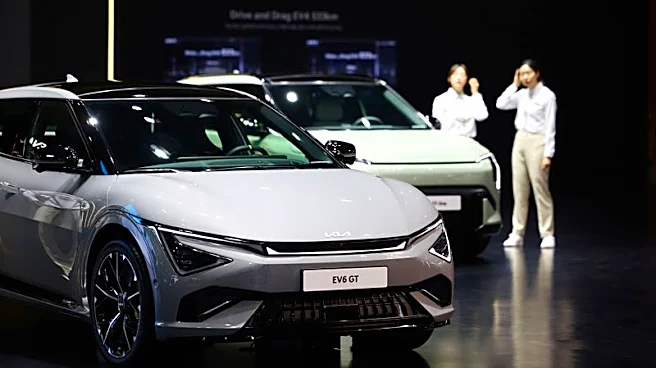
in response to fluctuating market conditions. Kia is planning to enter the U.S. pickup market with a hybrid truck by 2030, aiming to capture a share of the growing demand for hybrid vehicles. Meanwhile, Cars.com is undergoing a workforce reduction, cutting 11% of its staff as part of a cost realignment strategy, while simultaneously boosting its share buyback plan. These moves reflect the ongoing challenges and strategic shifts within the automotive sector as companies navigate economic pressures and changing consumer preferences.
Why It's Important?
The halt in production of Volkswagen's ID.4 highlights the challenges faced by automakers in maintaining EV production amid fluctuating demand. This decision could impact the company's market share in the U.S. EV sector, potentially benefiting competitors who continue to push forward with their EV offerings. Kia's entry into the hybrid pickup market signifies a strategic pivot towards more sustainable vehicle options, which could influence other automakers to follow suit. Cars.com's workforce reduction and share buyback plan indicate a focus on financial stability and shareholder value, which may set a precedent for other companies in the industry facing similar economic pressures. These developments underscore the dynamic nature of the automotive industry as it adapts to technological advancements and consumer demand shifts.
What's Next?
Volkswagen's decision to halt ID.4 production may lead to strategic reevaluations within the company, potentially affecting future EV models and production plans. Kia's hybrid pickup launch by 2030 could prompt other automakers to accelerate their hybrid vehicle development to remain competitive. Cars.com's workforce reduction might lead to operational changes and could influence similar actions by other companies seeking cost efficiencies. The automotive industry will likely continue to experience shifts as companies balance innovation with economic realities, potentially leading to new partnerships, mergers, or acquisitions as they seek to optimize their market positions.