




What's Happening?
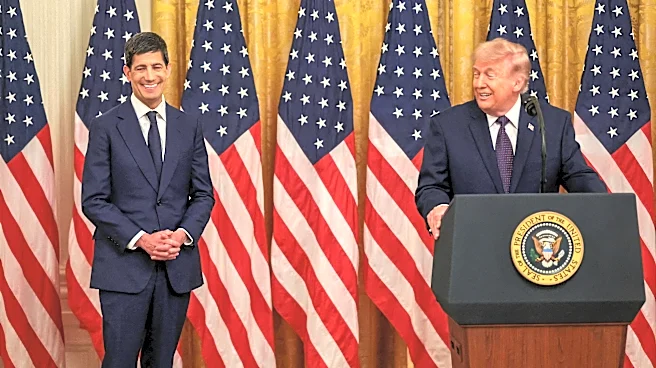
President Donald Trump has publicly urged the Federal Reserve to refrain from raising interest rates in light of recent strong economic growth. During an interview on 'Meet the Press,' Trump emphasized that the Federal Reserve should consider lowering
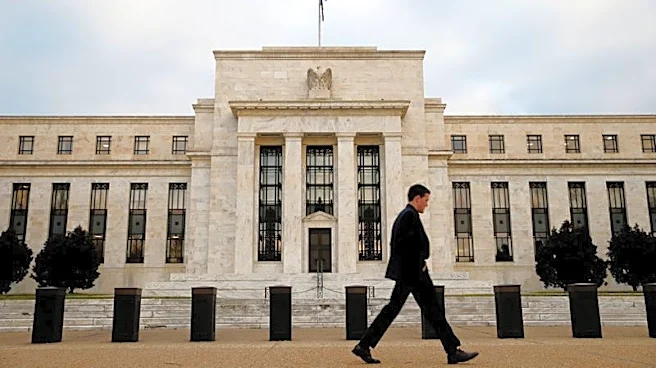
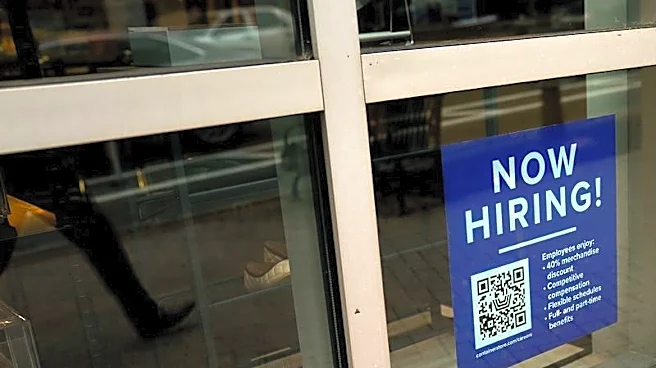
rates instead, to sustain the current economic momentum. This statement comes as the Federal Reserve, under the new leadership of Chairman Kevin Warsh, prepares for its upcoming policy meeting. The call for maintaining or lowering interest rates follows a robust U.S. jobs report that surpassed economic forecasts, prompting some analysts to speculate about a potential rate hike to prevent the economy from overheating.
Why It's Important?
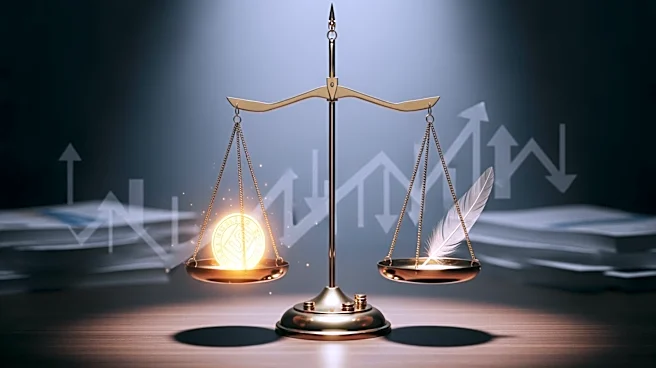
The President's comments highlight a significant tension between political leadership and the Federal Reserve's monetary policy decisions. Interest rate adjustments by the Federal Reserve can have profound impacts on the U.S. economy, influencing borrowing costs for consumers and businesses, and affecting overall economic growth. By advocating for lower rates, President Trump is prioritizing continued economic expansion and job creation. However, this stance may conflict with the Federal Reserve's mandate to control inflation and ensure long-term economic stability. The decision on interest rates will be closely watched by investors, businesses, and policymakers, as it could signal the Federal Reserve's approach to managing economic growth and inflation.
What's Next?
The Federal Reserve's upcoming policy meeting will be a critical moment for Chairman Kevin Warsh, as he navigates the balance between supporting economic growth and preventing inflation. The central bank's decision will likely be influenced by the latest economic data, including employment figures and inflation rates. Stakeholders across various sectors will be monitoring the outcome, as it could impact financial markets, consumer confidence, and business investment decisions. Additionally, any deviation from expected policy moves could lead to market volatility, as investors adjust their strategies based on the Federal Reserve's actions.