



What's Happening?
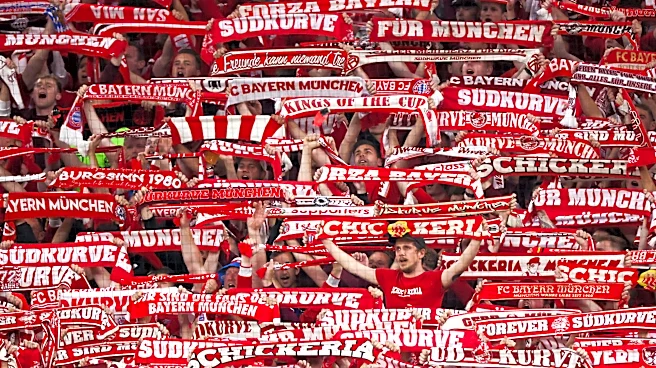
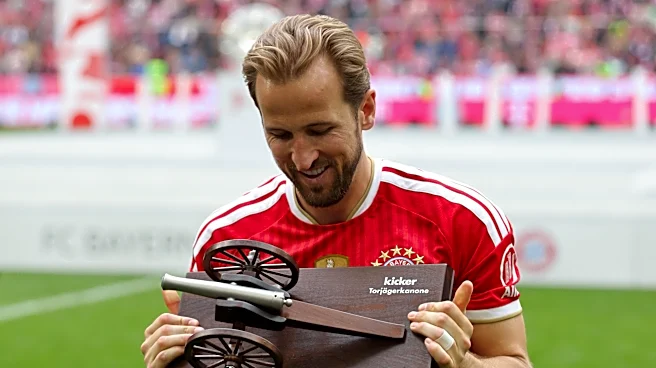
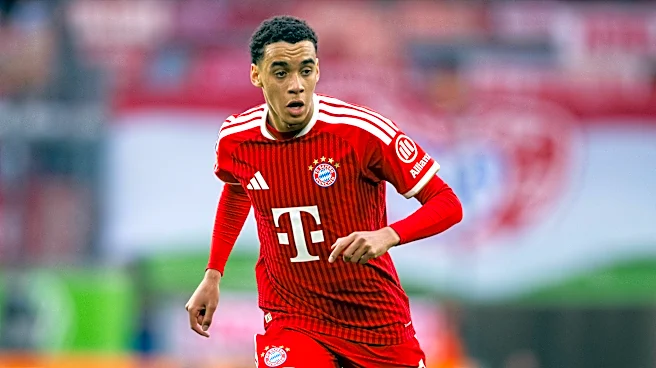
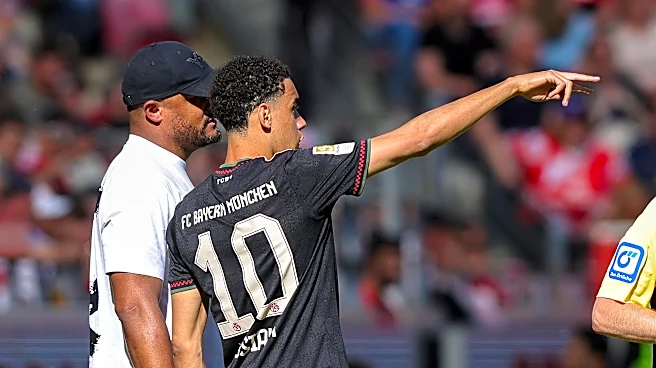
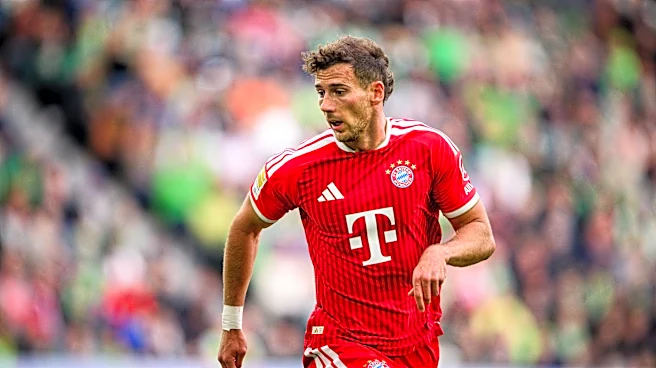
Bayern Munich concluded their Bundesliga season with a commanding 5-1 victory over FC Köln, showcasing their offensive strength. Harry Kane was a standout performer, scoring his fourth hat trick of the season. Tom Bischof and Nicolas Jackson also contributed
to the scoreline, with Bischof scoring from long range and Jackson adding a goal despite being in an offside position. The match highlighted Bayern's ability to dominate when well-rested, as evidenced by their fluid ball movement and strategic positioning. This victory capped off a season where Bayern nearly broke historical scoring records, finishing with 122 goals, just shy of Torino's 125-goal record from the 1947/48 season.
Why It's Important?
Bayern Munich's victory underscores their continued dominance in the Bundesliga, driven by their offensive capabilities and strategic depth. The team's ability to score prolifically has been a key factor in their success, but it also raises questions about the sustainability of such a high-intensity playing style. The need for strategic rotation and rest for veteran players like Harry Kane and Joshua Kimmich is crucial to maintain performance levels and prevent burnout. Bayern's success also highlights the challenges faced by other Bundesliga teams in retaining top talent, which has contributed to Bayern's dominance. This dynamic could influence future team strategies and player development within the league.
What's Next?
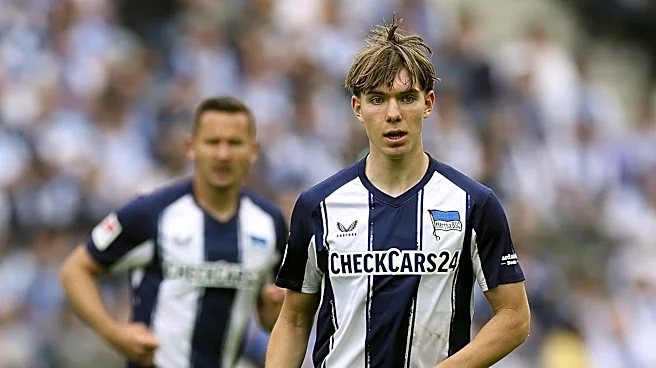
Looking ahead, Bayern Munich will need to focus on strategic player rotation and rest to maintain their competitive edge. The team is expected to integrate more young talent from their academy, such as Tom Bischof and Lennart Karl, to ensure a balanced squad capable of sustaining success across multiple competitions. Additionally, Bayern will likely explore backup options for key players to prevent over-reliance on veterans. The team's future strategy will involve balancing offensive prowess with defensive stability and player welfare to achieve long-term success.
Beyond the Headlines
Bayern Munich's approach to integrating young talent and managing player workload reflects broader trends in professional sports towards sustainable team management. The emphasis on youth development and strategic player rotation could serve as a model for other clubs aiming to balance immediate success with long-term sustainability. This approach also highlights the importance of nurturing homegrown talent to maintain competitive advantage in a global sports market. Bayern's strategy may influence other teams to invest more in youth academies and player development programs.