







What's Happening?
The CAR T cell therapy industry is facing challenges in scaling up manufacturing processes to make treatments more commercially viable. Adam Janvier, PhD, head of cell therapy at eXmoor Pharma, highlights the need to transform the labor-intensive manufacturing of CAR T therapies
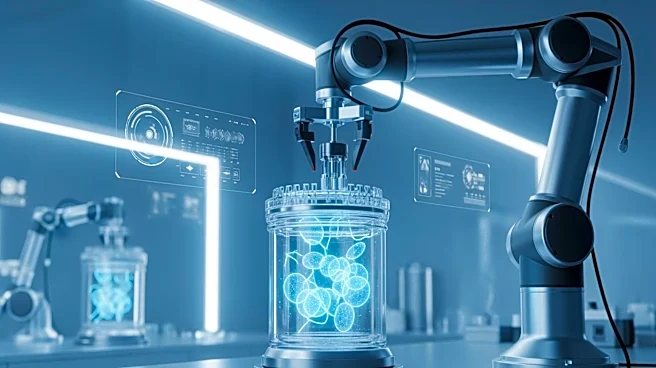
into scalable systems. Current methods involve harvesting a patient's immune cells, engineering them, and reinfusing them, which can take weeks. Emerging strategies include allogeneic CAR T therapies and in vivo approaches, which could simplify logistics and reduce costs. AI and automation are seen as key to streamlining manufacturing and quality control processes.
Why It's Important?
The advancement of CAR T cell therapies is crucial for treating blood cancers and potentially solid tumors. However, the current manufacturing constraints limit accessibility and affordability. By integrating AI and automation, the industry could reduce production times and costs, making these therapies more widely available. This shift could also attract more investment and accelerate the development of new treatments, ultimately benefiting patients and healthcare providers.
What's Next?
The industry is expected to continue exploring and investing in automation and AI technologies to enhance manufacturing efficiency. This includes developing robotic platforms and AI-based quality control systems. As these technologies mature, they could lead to significant changes in how CAR T therapies are produced and distributed, potentially setting new standards for the biopharmaceutical industry.