





What's Happening?
Billionaire investor Ray Dalio has highlighted the contrasting approaches to artificial intelligence (AI) development between China and the United States. Speaking at the Forbes Iconoclast conference in New York, Dalio noted that while American AI companies
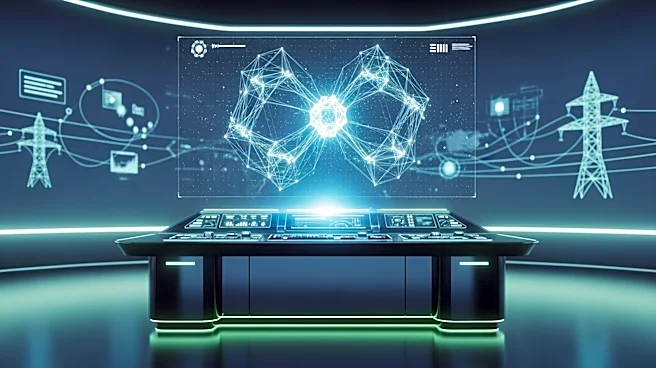
like OpenAI and Anthropic are focused on revenue growth and preparing for public market debuts, Chinese companies are treating AI as a utility. Dalio, who founded Bridgewater Associates, explained that China views AI similarly to essential services like electricity and water, aiming to make it accessible to all workers. This approach is part of China's broader strategy to drive economic growth through productivity gains, leveraging AI as a tool for widespread industrial and economic enhancement. Dalio's insights were supported by JPMorgan Chase executive Mary Callahan Erdoes, who emphasized that Chinese leaders do not share the American fear of job loss due to AI, instead focusing on AI enablement and industry dominance.
Why It's Important?
The differing strategies in AI development between China and the US have significant implications for global economic and technological leadership. China's approach to democratizing AI access could accelerate its industrial growth and enhance its competitive edge in global markets. By prioritizing widespread AI integration, China may replicate its success in the electric vehicle industry, where companies like BYD have rapidly expanded. In contrast, the US focus on profitability and market readiness reflects a more traditional business model, potentially limiting the speed and scope of AI adoption. This divergence could influence global AI standards, economic policies, and labor markets, with China potentially setting new benchmarks for AI-driven economic transformation.
What's Next?
As China continues to integrate AI across various sectors, it is likely to further solidify its position as a leader in AI technology. This could prompt US companies and policymakers to reassess their strategies to remain competitive. The focus on AI as a utility in China may lead to increased collaboration between government and industry, fostering innovation and rapid deployment. In the US, the ongoing debate over AI's impact on jobs and the economy may intensify, potentially influencing regulatory and investment decisions. The global AI landscape will likely see increased competition, with both countries striving to establish dominance in emerging technologies.