







What's Happening?
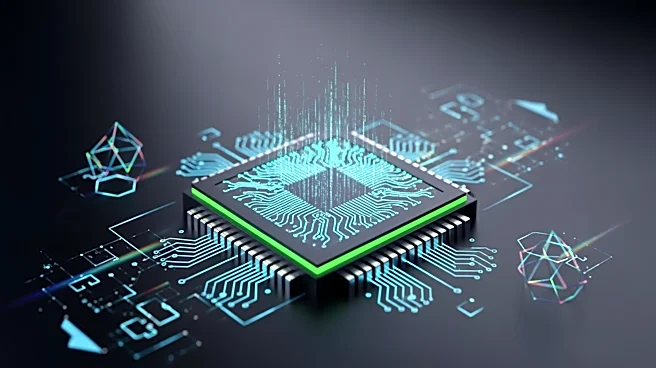
Nvidia, a leader in the artificial intelligence sector, is facing increasing competition from a growing number of startups focused on AI chip development. These startups have attracted significant investment, with $8.3 billion in funding reported globally
in 2026. The interest in these companies is driven by the need for more efficient AI inference technologies, which are crucial for practical applications of AI. While Nvidia's GPUs have been adapted for AI, startups argue that new architectures could offer better energy and cost efficiencies. Despite Nvidia's strong market position and substantial R&D investments, including a $20 billion acquisition of Groq and $4 billion in photonics technology, the influx of capital into startups suggests a competitive landscape is emerging.
Why It's Important?
The surge in investment towards AI chip startups signifies a potential shift in the AI technology landscape. As these startups develop more efficient AI inference technologies, they could challenge Nvidia's dominance, potentially leading to innovations that lower costs and improve energy efficiency in AI applications. This competition could drive technological advancements and diversification in the AI sector, impacting industries reliant on AI, such as healthcare, finance, and autonomous vehicles. Investors' willingness to fund these startups indicates confidence in their potential to disrupt the market, which could lead to significant changes in how AI infrastructure is developed and deployed.
What's Next?
As the competition intensifies, Nvidia may need to accelerate its innovation efforts to maintain its market position. The company could focus on developing new chip architectures or enhancing existing technologies to meet the demands of AI inference. Meanwhile, startups will likely continue to attract investment, enabling them to scale operations and bring new products to market. The evolving landscape may also prompt strategic partnerships or acquisitions as companies seek to bolster their capabilities. Stakeholders in the AI industry will be closely monitoring these developments, as they could influence future technology trends and market dynamics.