








What's Happening?
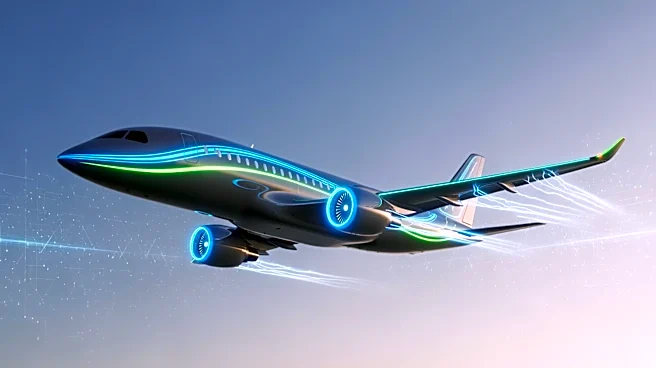
Electra, a U.S. hybrid-electric aircraft developer, has introduced a conceptual design for a 100-seat 'turbo-electric' aircraft. This development is part of NASA's Advanced Aircraft Concepts for Environmental Sustainability 2050 (AACES) program. The concept aims
to achieve a 17% efficiency improvement over expected 2050 advancements in aircraft technology. The design features a 'double-bubble' fuselage, two underwing turbofans, and three electricity-powered fans, utilizing boundary layer ingestion to enhance efficiency. Although Electra is known for its EL9, a nine-seat hybrid-electric aircraft, the company has not announced plans to bring this larger concept to market. The project involved collaboration with several industry and academic partners, including American Airlines and MIT.
Why It's Important?
The introduction of Electra's 100-seat hybrid-electric aircraft concept represents a significant step towards more sustainable aviation. By potentially improving efficiency and reducing emissions, this concept aligns with global efforts to mitigate climate change impacts. The collaboration with NASA and other industry leaders underscores the importance of public-private partnerships in advancing aerospace technology. If realized, such innovations could transform commercial aviation, offering airlines more environmentally friendly options and potentially reducing operational costs. The concept's compatibility with existing airport infrastructure further enhances its feasibility for future implementation.
What's Next?
While Electra has not committed to developing this aircraft for market, the concept's unveiling could stimulate further research and investment in hybrid-electric aviation technologies. The project's success may encourage other aerospace companies to explore similar innovations, potentially leading to a new generation of eco-friendly aircraft. Continued collaboration with NASA and industry partners will be crucial in refining the design and addressing technical challenges. The aviation industry and regulatory bodies will likely monitor these developments closely, considering the potential implications for future aircraft certification and environmental standards.