








What's Happening?
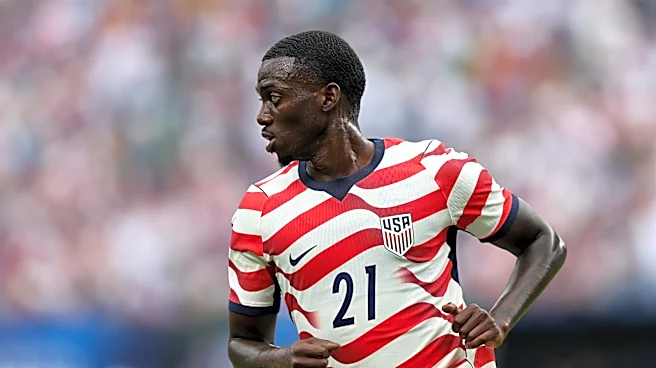
Cristian Roldan, a midfielder for the Seattle Sounders, has chosen to represent the United States Men's National Team (USMNT) at the 2026 World Cup. Despite being eligible to play for Guatemala and El Salvador, Roldan opted for the U.S. as a way to give
back to the country that provided his family with opportunities. His parents fled civil wars in Central America in the 1980s and settled in Pico Rivera, California, where Roldan and his brothers developed their soccer skills. Roldan's decision is also influenced by his upbringing in the U.S., where he played collegiately at the University of Washington and has had a successful career in Major League Soccer (MLS).
Why It's Important?
Roldan's choice to play for the USMNT highlights the multicultural fabric of American society and the opportunities it offers to immigrants. His story underscores the role of sports as a platform for cultural integration and personal achievement. For the USMNT, having players like Roldan, who bring diverse backgrounds and experiences, can enhance team dynamics and performance. His decision also reflects the broader narrative of immigrant contributions to American sports and society, potentially inspiring young athletes from similar backgrounds.
What's Next?
Roldan will participate in the World Cup games set to take place in Los Angeles, close to his hometown. His involvement in the tournament is expected to draw attention to his journey and the support he received from his community. As the World Cup approaches, Roldan's story may inspire discussions on the importance of community support in nurturing talent and the impact of sports on cultural identity. The USMNT will look to leverage Roldan's skills and experience as they aim to advance in the tournament.
Beyond the Headlines
Roldan's decision to represent the U.S. at the World Cup also highlights the complex identity negotiations faced by many athletes with multicultural backgrounds. His story is a testament to the power of sports in bridging cultural divides and fostering a sense of belonging. Additionally, it raises awareness about the challenges and opportunities faced by immigrant families in the U.S., emphasizing the importance of community and family support in achieving success.