



What's Happening?
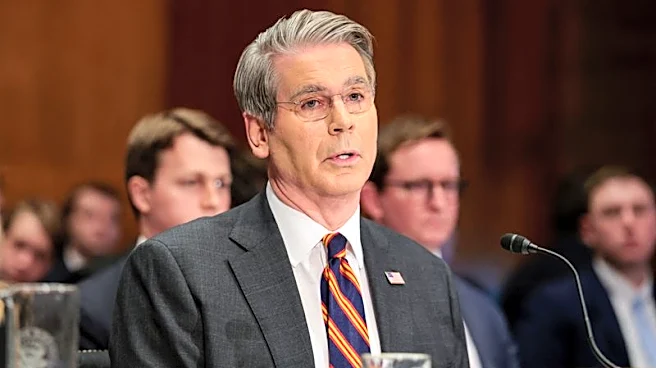
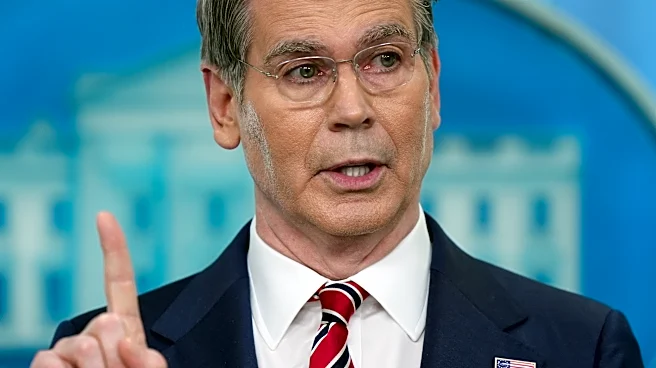
Treasury Secretary Scott Bessent has announced that U.S. banks should prepare to collect citizenship data from customers, aligning with President Trump's broader immigration policy efforts. This initiative is part of an executive order in process, aiming
to tie immigration policy to data collection for voting and Census purposes. Currently, U.S. banks are not required to collect citizenship information to open accounts, but they must verify identities under 'Know Your Customer' rules to prevent financial crimes. Bessent argues that knowing a customer's citizenship status is crucial for banks to fulfill their responsibilities. The proposal has received support from some Republicans, including Sen. Tom Cotton, who introduced a bill requiring banks to verify the legal status of account holders. However, there are concerns about the economic impact and increased administrative costs for banks, with estimates suggesting significant financial burdens.
Why It's Important?
The proposed requirement for banks to collect citizenship data could have significant implications for the U.S. financial system and economy. It may lead to increased administrative costs for banks, potentially ranging from $2.6 billion to $5.6 billion, as they would need to verify both new and existing account holders. This could also affect the unbanked population, particularly undocumented immigrants, who rely on bank accounts to pay taxes and participate in the economy. Denying access to banking services could push more individuals into a cash-only economy, limiting their economic mobility and contribution to growth. The policy reflects a broader trend of integrating immigration status into various aspects of public policy, raising questions about privacy and the role of financial institutions in immigration enforcement.
What's Next?
If the executive order is implemented, banks will need to develop systems to verify citizenship status, potentially leading to legal challenges and debates over privacy and discrimination. Financial institutions may lobby against the order due to the anticipated costs and operational challenges. Additionally, there could be public backlash from civil rights groups concerned about the implications for undocumented immigrants and their access to financial services. The policy's impact on the banking sector and broader economy will likely be closely monitored by policymakers and industry stakeholders.