







What's Happening?
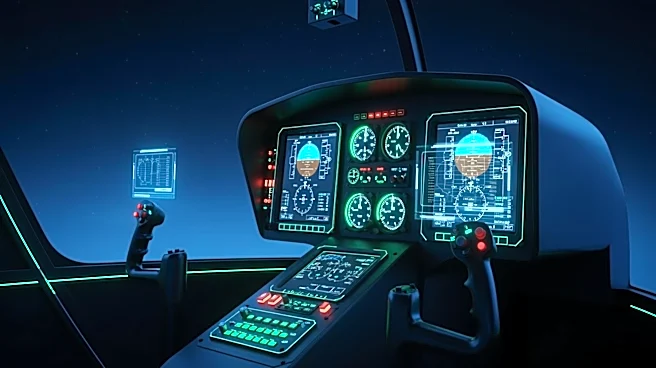
The Japan Civil Aviation Bureau (JCAB) has approved Loft Dynamics' virtual-reality helicopter simulator as a Level 7 flight training device, marking a significant advancement in aviation training technology. The simulator, which is operated by Nakanihon
Air, one of Japan's largest helicopter operators, is the first of its kind in Japan and the Asia-Pacific region. The Level 7 qualification allows the simulator to be used for both initial and recurrent helicopter training, offering a range of training scenarios including emergency procedures and instrument tasks. This approval aligns JCAB with other major aviation regulators like the European Union Aviation Safety Agency and the FAA.
Why It's Important?
The approval of Loft's VR simulator represents a major step forward in aviation training, providing a cost-effective and efficient alternative to traditional flight training methods. This technology allows for more frequent training repetitions and exposure to various scenarios, enhancing pilot proficiency and safety. The simulator's capabilities can reduce the need for actual flight time, lowering operational costs and environmental impact. For Japan, a major helicopter market, this development could lead to improved training standards and increased safety in helicopter operations.
What's Next?
With JCAB's approval, Nakanihon Air and other operators in Japan may begin integrating the VR simulator into their training programs. This could lead to broader adoption of VR technology in aviation training across the Asia-Pacific region. As more data is gathered on the effectiveness of VR training, there may be further regulatory developments and potential expansion of VR training applications. The success of this initiative could also encourage other countries to explore similar technologies for their aviation training needs.
Beyond the Headlines
The introduction of VR technology in aviation training highlights the potential for innovation in other sectors, such as emergency response and infrastructure inspection. It also raises questions about the future of pilot training and the balance between virtual and real-world experience. As VR technology continues to evolve, it may lead to new standards and practices in aviation and beyond, influencing how industries approach training and skill development.