






What's Happening?
Teledyne FLIR Defense, a division of Teledyne Technologies, has been awarded an $11.2 million contract by the U.S. Army's Capability Program Executive for Chemical, Biological, Radiological, and Nuclear Defense (CPE CBRND). The contract involves the delivery
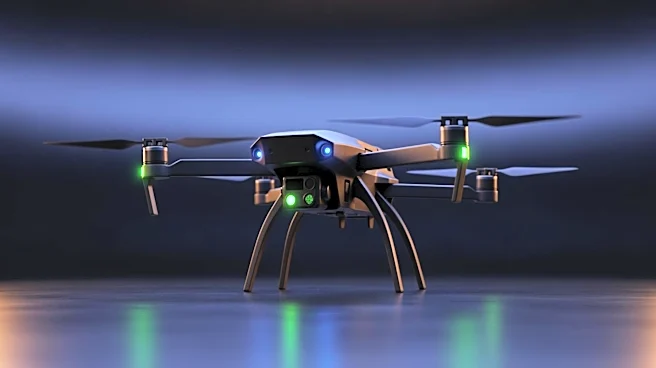
of over 45 advanced unmanned aerial system (UAS) kits designed to enhance battlefield protection by mapping chemical, biological, radiological, and nuclear threats. These kits, based on the SkyRaider® drone platform, are part of the Army's Chemical, Biological, Radiological, and Nuclear Sensor Integration on Robotic Platforms (CSIRP) program. The program aims to rapidly prototype and field modular sensor solutions that improve drones and unmanned ground vehicles through advanced sensing, AI, machine learning, and communications technologies. The SkyRaider drones are equipped with semi-autonomous CBRN search and survey capabilities, allowing frontline units to assess contaminated environments without exposing soldiers to danger.
Why It's Important?
This contract underscores the growing importance of unmanned systems in modern military operations, particularly in hazardous environments. By integrating advanced CBRN detection technologies into drones, the U.S. Army can enhance its ability to detect and respond to threats without risking personnel. This development is significant for the defense industry as it highlights the increasing reliance on technology to address complex security challenges. The contract also strengthens Teledyne FLIR Defense's position as a leader in intelligent sensing and unmanned systems, potentially leading to further opportunities in defense and security sectors. The use of such technologies could lead to safer and more efficient military operations, reducing the risk to human life while maintaining operational effectiveness.
What's Next?
The production of these sensor kits is underway at Teledyne FLIR Defense facilities in Maryland and Indiana, with additional engineering support from Oklahoma. Deliveries are expected to begin in the second quarter of 2026. As these systems are deployed, the U.S. Army will likely evaluate their effectiveness in real-world scenarios, potentially leading to further contracts or enhancements. The success of this initiative could prompt other branches of the military or allied nations to adopt similar technologies, expanding the market for advanced unmanned systems. Additionally, ongoing developments in AI and machine learning could further enhance the capabilities of these systems, leading to more sophisticated and autonomous solutions in the future.