
What's Happening?
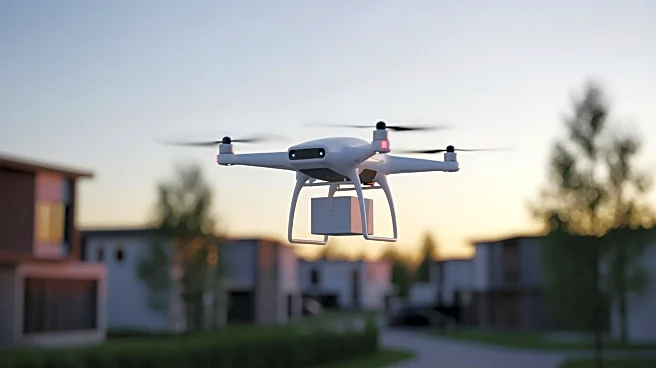
Orlando is set to become a hub for drone deliveries as part of a new initiative involving Wing, a Google affiliate, and Walmart. The service aims to launch by early 2026, with plans to operate in 100 Walmart stores
across the Southeast, including Orlando and Tampa. The drones, capable of carrying packages under 2.5 pounds, will initially deliver to single-family homes within a six-mile radius of participating Walmarts. The service is designed to improve convenience for residents by offering quick delivery of groceries and other small items, potentially reducing traffic and emissions. A demonstration at Orlando City Hall showcased the technology, with Mayor Buddy Dyer highlighting the potential benefits of this new delivery method.
Why It's Important?
The introduction of drone delivery services in Orlando represents a significant shift in how goods are transported and delivered, potentially setting a precedent for other cities. This initiative could lead to reduced traffic congestion and lower emissions, aligning with broader environmental goals. For consumers, it offers a new level of convenience, allowing for rapid delivery of essential items. Retailers like Walmart stand to benefit from increased customer satisfaction and potentially higher sales volumes. However, the success of this service will depend on public acceptance and the ability to integrate drones safely into urban environments.
What's Next?
As the service prepares to launch, Wing and Walmart will finalize the list of participating stores and build necessary infrastructure, such as docking stations. Public education campaigns will be crucial to ensure residents understand the safety and benefits of drone deliveries. The service's success in Orlando could influence its expansion to other regions, potentially transforming the retail and logistics industries. Stakeholders will closely monitor the service's impact on traffic, emissions, and consumer behavior.
Beyond the Headlines
The deployment of drone delivery services raises questions about privacy, airspace regulation, and the future of urban logistics. As drones become more common, regulatory frameworks will need to evolve to address safety and privacy concerns. Additionally, the technology could spur innovation in other areas, such as autonomous vehicles and smart city infrastructure. The cultural acceptance of drones will play a critical role in their widespread adoption.