
What's Happening?
Tesla is reportedly preparing to release a new version of its Full Self-Driving (FSD) computer, known as Hardware 4.5. This development was identified through the Tesla Electronic Parts Catalog, which
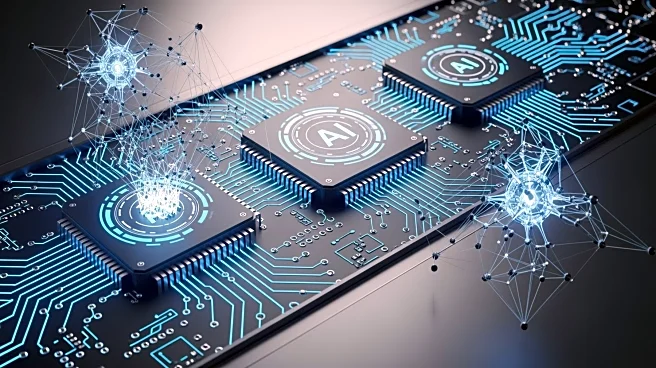
lists the new component as a potential upgrade or replacement for existing systems. The new hardware is speculated to feature a 3-System-on-Chip (SoC) design, a significant enhancement from the dual-SoC architecture used in previous versions. This upgrade could allow for greater computational power and redundancy, enabling more complex neural networks and improved decision-making capabilities in Tesla vehicles. The 3-SoC setup may also facilitate the implementation of Triple Modular Redundancy (TMR), enhancing the system's fault tolerance and safety. This advancement is seen as a strategic move to bridge the gap until the next-generation AI5 chip is ready for production.
Why It's Important?
The introduction of Hardware 4.5 is significant for Tesla as it addresses the growing computational demands of its FSD technology. As Tesla's software evolves, requiring more memory and processing power, the new hardware ensures that current and future vehicles can support these advancements. This move is crucial for maintaining Tesla's competitive edge in the autonomous vehicle market, as it allows the company to continue improving its FSD capabilities without waiting for the AI5 chip. The enhanced safety features and increased computational power could lead to more reliable and efficient autonomous driving, potentially accelerating the adoption of Tesla's self-driving technology. This development also highlights Tesla's commitment to continuous innovation and its ability to adapt to the rapidly changing landscape of automotive technology.
What's Next?
As Tesla rolls out Hardware 4.5, the company is likely to focus on integrating this new technology into its production line, ensuring that upcoming vehicles are equipped with the latest advancements. The introduction of a 3-SoC architecture may also lead to further software updates that leverage the increased computational capabilities, enhancing the overall performance of Tesla's FSD system. Additionally, Tesla may use this period to gather data and validate new software iterations in real-world conditions, preparing for the eventual transition to the AI5 chip. Stakeholders, including investors and consumers, will be closely monitoring these developments, as they could impact Tesla's market position and the broader autonomous vehicle industry.