
What's Happening?
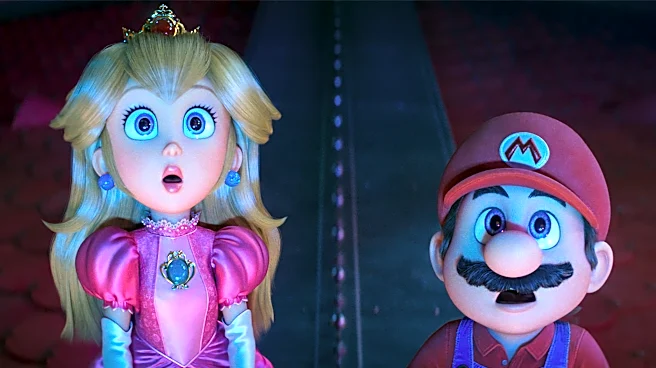
Universal's animated sequel, 'The Super Mario Galaxy Movie,' has maintained its position as the top film at the domestic box office, earning $69 million from 4,284 theaters across North America in its second
weekend. This marks a 48% decline from its debut, which is considered a strong hold for a blockbuster of this scale. The film has grossed $308 million domestically and $629 million globally, surpassing 'Project Hail Mary' as the highest-grossing movie of the year after just 12 days in theaters. The movie faced little competition for family audiences, with other releases like 'You, Me and Tuscany' targeting different demographics. The overall box office performance is promising, with ticket sales 23% ahead of the same period in 2025.
Why It's Important?
The success of 'The Super Mario Galaxy Movie' highlights the continued appeal of video game adaptations in cinema, particularly those with established fan bases. Its strong performance contributes to a positive trend in the box office, which is recovering from the pandemic's impact on theater attendance. The film's success also underscores Universal's effective marketing and distribution strategies, which have capitalized on the franchise's popularity. This trend is significant for the film industry as it indicates a resurgence in theater attendance and a potential return to pre-pandemic box office levels. The film's performance may encourage studios to invest more in similar adaptations, potentially shaping future film production and distribution strategies.
What's Next?
As theater owners prepare for CinemaCon, the industry's annual trade show, the positive box office trends are likely to influence discussions and decisions regarding upcoming film slates. Studios may be encouraged to greenlight more projects with similar potential for broad audience appeal. Additionally, the continued success of 'The Super Mario Galaxy Movie' could lead to further sequels or spin-offs, expanding the franchise's cinematic universe. The film's performance may also impact the strategies of competing studios, prompting them to explore similar adaptations or capitalize on existing franchises to attract audiences back to theaters.