



What's Happening?
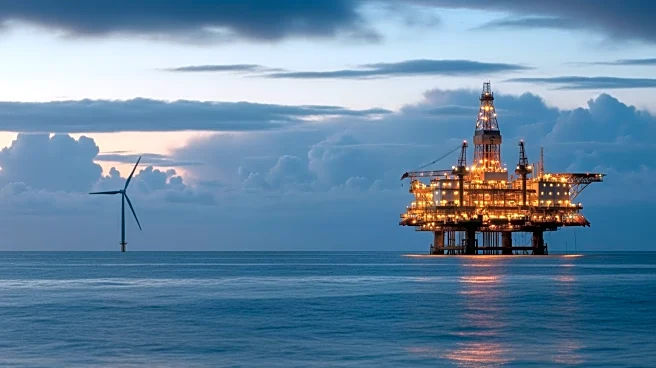
The U.S. Interior Department has agreed to pay TotalEnergies nearly $1 billion to abandon its plans for offshore wind projects in the United States. This decision aligns with President Trump's energy policy, which favors fossil fuels over renewable energy sources.
The payment ensures that TotalEnergies will not proceed with offshore wind farms that were not imminent, as the company had not planned to build them soon. The agreement also involves TotalEnergies relinquishing a second lease off the coasts of North and South Carolina. The decision has sparked criticism, as other companies like Ørsted and EDF have opted to hold their leases without financial compensation, waiting for a more favorable political climate.
Why It's Important?
This development highlights the ongoing tension between renewable energy initiatives and fossil fuel interests in the U.S. The decision to pay TotalEnergies to abandon wind projects could hinder the growth of the offshore wind industry, which is seen as a crucial component of the transition to clean energy. Critics argue that this move could increase energy costs for consumers by removing potential sources of affordable, renewable energy. The payment also raises questions about the use of taxpayer money to support policies that may not align with broader environmental goals. The situation underscores the challenges faced by renewable energy projects in navigating political and economic landscapes.
What's Next?
The future of offshore wind projects in the U.S. remains uncertain, particularly under the current administration's policies. Companies like Ørsted and EDF are likely to wait until a potential shift in U.S. energy policy before proceeding with their projects. Meanwhile, TotalEnergies may focus on developing offshore wind projects in other countries where the political climate is more supportive. The decision could also prompt further debate about the role of government in shaping energy policy and the balance between supporting traditional energy sources and investing in renewable alternatives.
Beyond the Headlines
The decision to pay TotalEnergies to abandon its projects could have long-term implications for the U.S. energy landscape. It may discourage other companies from investing in renewable energy projects in the U.S., fearing similar political and financial obstacles. Additionally, the move could impact the U.S.'s ability to meet international climate commitments and reduce greenhouse gas emissions. The situation also highlights the influence of political ideology on energy policy, which can significantly affect the direction and pace of the transition to renewable energy.