

What's Happening?
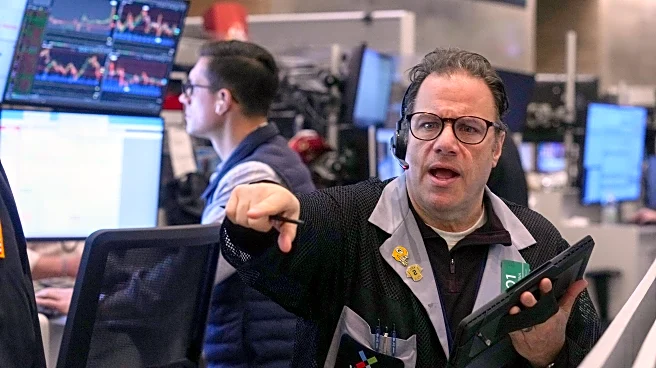
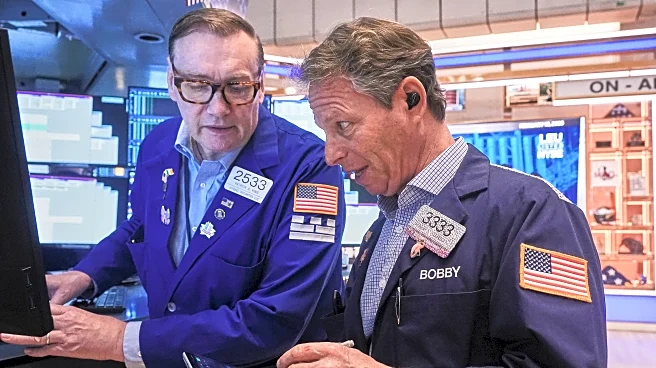
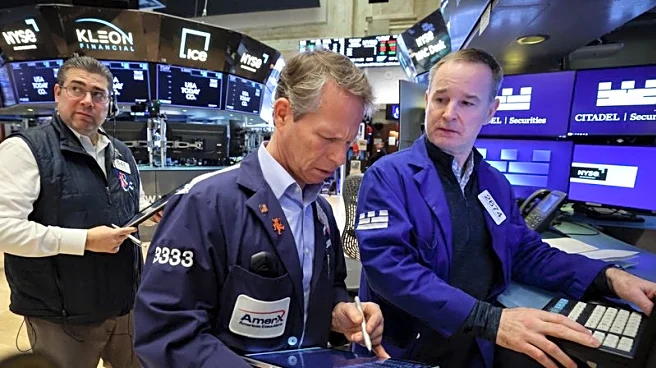
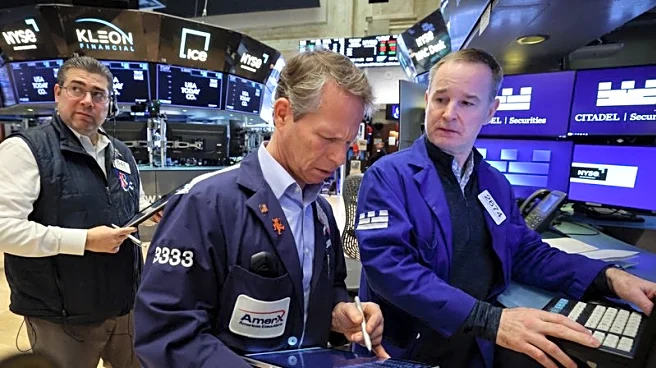
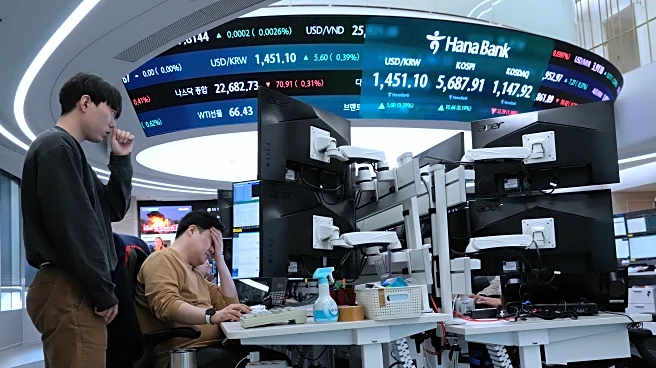
U.S. markets experienced a turbulent day as tensions between Washington and Iran escalated, coupled with renewed concerns over the stability of the private credit market. President Trump announced that a decision on whether to strike Iran would be made within ten days, causing oil prices to rise by nearly 2% in U.S. trading. This geopolitical tension added to the market's volatility. Concurrently, Blue Owl Capital's decision to tighten investor liquidity after selling $1.4 billion in loan assets raised alarms about the private credit market's stability. This move led to a nearly 6% drop in Blue Owl's stock, with other asset managers like Blackstone and Apollo Global Management also seeing declines. The combined pressures resulted in the S&P
500 losing 0.28%, the Dow Jones Industrial Average falling 0.54%, and the Nasdaq Composite closing 0.31% down.
Why It's Important?
The developments highlight significant vulnerabilities in both geopolitical and financial sectors that could have far-reaching impacts on the U.S. economy. The potential military action against Iran could disrupt global oil supplies, leading to increased energy prices and affecting various industries reliant on oil. Additionally, the instability in the private credit market, as evidenced by Blue Owl Capital's actions, could signal broader financial instability. This situation could lead to tighter credit conditions, affecting businesses' ability to finance operations and growth. Investors and policymakers will need to closely monitor these developments, as they could influence economic policy decisions and market strategies.
What's Next?
In the coming days, market participants will be closely watching for President Trump's decision regarding Iran, as any military action could have immediate and significant impacts on global oil markets and geopolitical stability. Additionally, the private credit market's response to Blue Owl Capital's liquidity tightening will be scrutinized for signs of broader financial stress. Asset managers and investors may need to reassess their strategies in light of these developments, potentially leading to shifts in investment allocations and risk management practices.