











What's Happening?
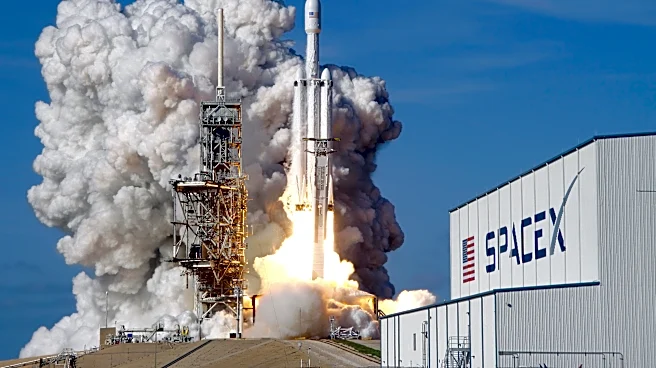
SpaceX, led by Elon Musk, has officially launched the largest initial public offering (IPO) in history, raising $75 billion. The company priced its 555.6 million shares at $135 each, surpassing the previous record set by Saudi Aramco in 2019. SpaceX, known
for its ambitious space and AI projects, will trade under the ticker symbol SPCX on the Nasdaq stock exchange. The IPO has attracted significant interest, with demand reportedly four times the available shares. This move positions Musk to potentially become the world's first trillionaire, given his substantial holdings in the company. The IPO also benefits major shareholders, including Antonio Gracias and Gwynne Shotwell, as well as numerous venture capitalists and smaller investors who supported SpaceX during its private phase.
Why It's Important?
The successful IPO of SpaceX marks a significant milestone in the private space industry, highlighting the growing investor confidence in space exploration and technology ventures. The massive capital influx will enable SpaceX to further its ambitious projects, such as developing reusable rockets and establishing a human colony on Mars. This development underscores the increasing role of private companies in space exploration, traditionally dominated by government agencies. The IPO's success also reflects the broader market's appetite for innovative technology companies, potentially influencing future investment trends in the sector. Additionally, the financial windfall for investors and stakeholders could lead to increased investments in other high-tech ventures, further driving innovation and economic growth.
What's Next?
As SpaceX begins trading on the Nasdaq, the company's share price is expected to fluctuate based on market dynamics and investor sentiment. The high demand for shares suggests a potential price increase, commonly referred to as an 'IPO pop.' In the long term, SpaceX faces the challenge of justifying its high valuation through successful execution of its projects, including the Starlink satellite network and Mars colonization plans. The company's performance will be closely watched by investors and industry analysts, as it could set a precedent for future space-related IPOs. Additionally, the influx of capital may accelerate SpaceX's technological advancements, potentially reshaping the landscape of space exploration and satellite communications.
Beyond the Headlines
The SpaceX IPO raises important questions about the future of space exploration and the role of private companies in this domain. The company's ambitious goals, such as establishing a human presence on Mars, highlight the ethical and logistical challenges of space colonization. Furthermore, the environmental impact of increased satellite launches and space debris management will require careful consideration. The success of SpaceX could also influence regulatory frameworks governing space activities, as governments and international bodies adapt to the growing influence of private entities in space. This development may prompt discussions on the balance between commercial interests and the preservation of space as a shared resource.