






What's Happening?
Macaroni KID Erie has published a list of 50 easy and engaging Earth Day activities for children, aimed at promoting environmental awareness and sustainability. The activities are designed to be simple, low-prep, and enjoyable for families to do together
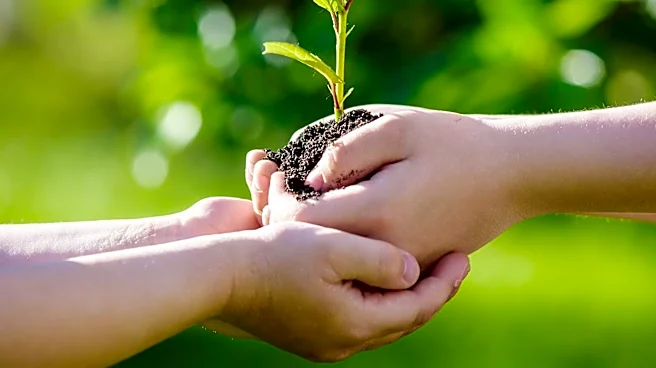
at home. Suggestions include nature walks, litter collection, planting flowers, and creating bird feeders. The list also features creative projects like making mud kitchens, painting rocks, and building stick forts. Additionally, the article encourages recycled crafts, such as turning paper towel tubes into animals and using old newspapers to make beads. These activities are intended to help children connect with nature and understand the importance of environmental conservation.
Why It's Important?
The initiative by Macaroni KID Erie to promote Earth Day activities for children is significant as it fosters early environmental consciousness and responsibility. By engaging children in fun and educational activities, the program aims to instill sustainable habits that can have long-term benefits for the environment. Encouraging children to participate in activities like recycling, gardening, and nature exploration helps them develop a deeper appreciation for the natural world. This approach not only educates the younger generation about environmental issues but also empowers them to make positive changes in their communities. Such initiatives are crucial in building a more environmentally aware society, which is essential for addressing global challenges like climate change and resource conservation.
What's Next?
As Earth Day approaches, families are encouraged to incorporate these activities into their routines, potentially leading to ongoing environmental engagement beyond the holiday. Schools and community organizations might also adopt similar programs to broaden the impact. The success of these activities could inspire further initiatives aimed at integrating environmental education into everyday life. Additionally, the positive reception of such programs may lead to increased collaboration between educational platforms and environmental organizations, fostering a culture of sustainability among future generations.