


What's Happening?
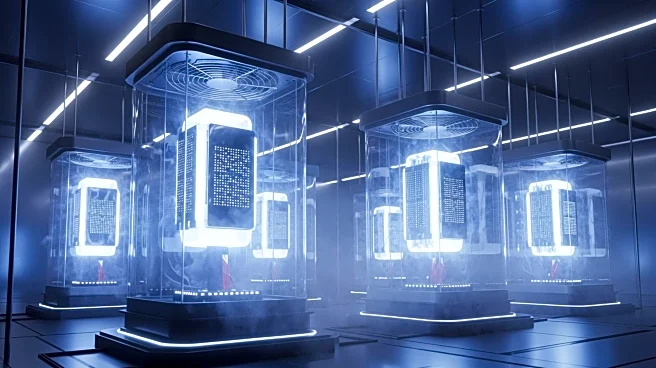
Quantum computing is emerging as a revolutionary technology capable of solving complex problems beyond the reach of classical computers. This advancement is driven by the principles of quantum mechanics, allowing quantum computers to process vast amounts of data simultaneously. However, the construction of facilities to house these computers presents significant challenges. These facilities require environments with extremely low temperatures, close to absolute zero, to maintain the stability of quantum bits (qubits). This necessitates advanced cryogenic systems and specialized structures to mitigate electromagnetic interference and vibrations. Buro Happold, an international engineering consultancy, is at the forefront of designing these facilities,
working closely with computing experts to meet the unique requirements of quantum computing equipment.
Why It's Important?
The development of quantum computing facilities is crucial as this technology holds the potential to transform various fields, including cryptography, material science, and artificial intelligence. Quantum computing could lead to breakthroughs in drug discovery, optimization problems, and secure communication, significantly impacting industries and driving innovation. The ability to maintain the delicate state of qubits through sophisticated environmental controls is essential for unlocking the full potential of quantum computing. As research and development in this field continue, the successful integration of quantum technology with the built environment will be pivotal in realizing its benefits across social and economic sectors.
What's Next?
As quantum computing technology advances, the demand for specialized facilities will likely increase. Universities and technology companies leading the development of quantum computing are also focusing on sustainability goals. For instance, the University of Delft aims to achieve carbon neutrality and a circular campus by 2030. This commitment to sustainability will influence the design of future quantum computing facilities, balancing the energy-intensive requirements of cryogenic and laser laboratories with broader environmental objectives. The ongoing collaboration between engineers, architects, and computing experts will be essential in overcoming the challenges associated with these cutting-edge facilities.
Beyond the Headlines
The construction of quantum computing facilities raises ethical and environmental considerations. The energy consumption required to maintain the extreme conditions necessary for quantum computing could conflict with sustainability goals. As institutions strive to balance technological advancement with environmental responsibility, the development of energy-efficient solutions will be critical. Additionally, the potential societal impacts of quantum computing, such as advancements in secure communication and data processing, could reshape industries and influence global economic dynamics.