

What's Happening?
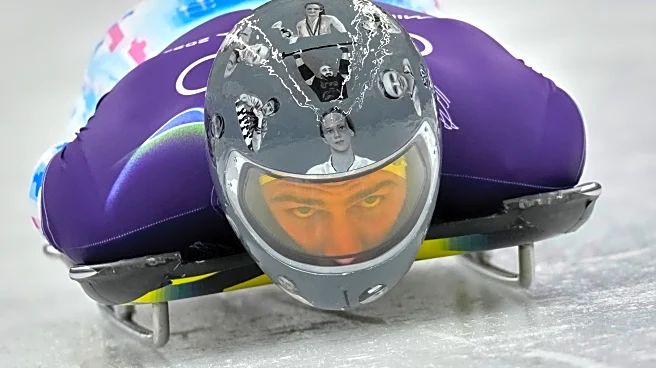
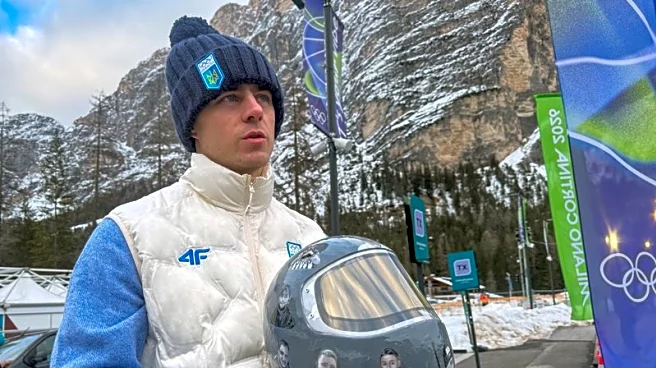
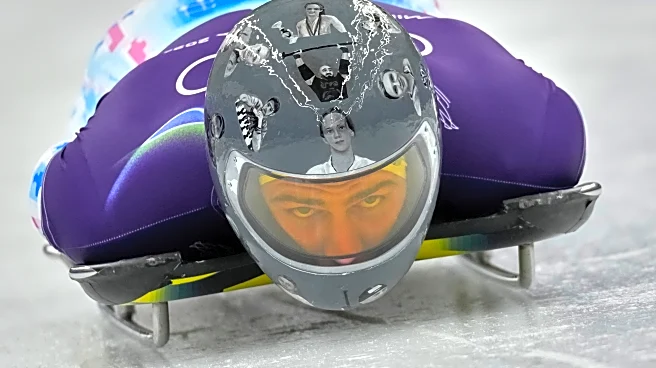
Ukrainian skeleton athlete Vladyslav Heraskevych has been banned from competing in the Milan Cortina Games by the International Olympic Committee (IOC) due to his helmet, which pays tribute to athletes and coaches killed in the war with Russia. The IOC ruled that the helmet violated rules against political statements in competition. This decision has drawn global disappointment, with Ukrainian and international leaders expressing their discontent. Fellow Olympians, including ski racer Dmytro Shepiuk, have shown support for Heraskevych, finding subtle ways to dissent without risking their own disqualification. The situation highlights the difficult choices athletes from war-torn countries face between using their platform for political statements and focusing
on their sports careers.
Why It's Important?
The ban on Heraskevych underscores the ongoing tension between sports and politics, particularly for athletes from conflict zones. The IOC's decision has sparked a debate about the role of political expression in sports, with many arguing that athletes should be allowed to use their platform to raise awareness about critical issues. This incident could influence future policies regarding political statements at international sporting events. It also highlights the challenges faced by Ukrainian athletes, who continue to compete under difficult circumstances, and raises questions about the balance between maintaining the apolitical nature of sports and allowing athletes to express solidarity with their home countries.
What's Next?
The IOC's decision may lead to further discussions and potential policy reviews regarding political expressions in sports. Athletes and sports organizations might push for clearer guidelines on what constitutes a political statement. Additionally, there could be increased support for athletes like Heraskevych, who choose to make political statements, potentially leading to more visible acts of solidarity at future events. The situation may also prompt other athletes to consider how they can express their views without facing disqualification, possibly leading to more creative forms of protest.
Beyond the Headlines
This incident reflects broader issues of freedom of expression and the role of sports as a platform for social and political change. Historically, athletes who have made political statements have often faced backlash but have also become symbols of resistance and change. The IOC's actions may inadvertently amplify Heraskevych's message, drawing more attention to the plight of Ukrainian athletes and the ongoing conflict in Ukraine. This could lead to increased international support and awareness, potentially influencing public opinion and policy decisions related to the conflict.